
Precision Commercial Sink Drains & Grid Assemblies
Engineered for commercial, hospitality, and institutional installations requiring durable non-pop-up strainers and overflow plates.
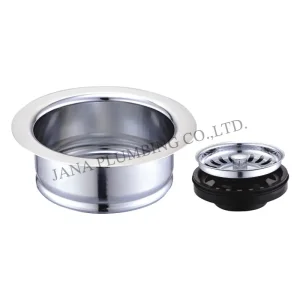
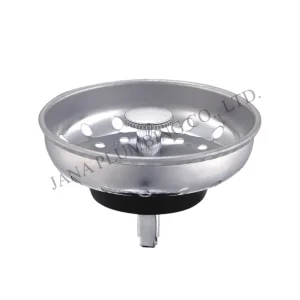
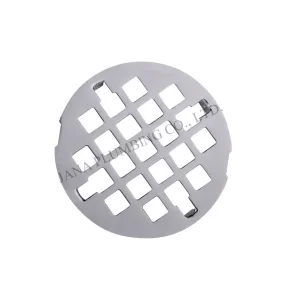
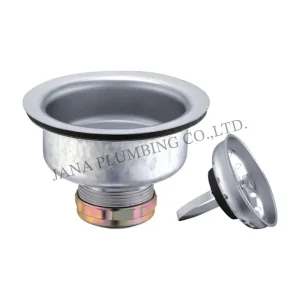
Executive Overview: The Commercial Shift Toward Non-Pop Up Bathroom Drains
Understanding why international plumbing engineers, architectural specifiers, and commercial hardware distributors are prioritizing fixed-grid and open-rim drainage hardware.
Global Procurement Drivers in Public & Hospitality Sectors
In modern commercial construction—ranging from international airports and mega-shopping malls to healthcare facilities, higher education dormitories, and luxury hotel chains—the selection of lavatory drainage fittings has shifted dramatically. Traditional mechanical pop-up assemblies (operated by rear lift rods or internal spring-toggle click-clack mechanisms) present significant maintenance liabilities in high-traffic restrooms. Internal mechanical linkages are prone to hair accumulation, soap scum buildup, vandalism, and mechanical fatigue over extended operating cycles.
Consequently, major engineering firms across North America, Europe, and the Middle East are specifying bathroom sink drains without pop-up mechanisms (frequently designated as grid strainers, open drain assemblies, or fixed perforated waste fittings). These un-stoppered designs guarantee continuous drainage, prevent accidental or intentional sink overflow flooding, conform with ADA (Americans with Disabilities Act) accessibility mandates, and drastically reduce facility maintenance costs.
China’s Strategic Position as the Manufacturing Epicenter
As global demand escalates, China remains the primary manufacturing base for precision brass and stainless steel plumbing components. Chinese manufacturers located in established industrial hubs—such as Yuhuan and Ningbo in Zhejiang Province—possess unmatched capabilities in automated brass hot forging, heavy-duty gravity die casting, multi-axis CNC machining, and advanced physical vapor deposition (PVD) surface treatment.
By controlling the complete production value chain from raw ingot alloy blending to final UPC/cUPC certification compliance testing, Chinese suppliers deliver high-performance drain assemblies at scale, empowering wholesale importers, OEM faucet brands, and private-label plumbing suppliers to capture robust profit margins while mitigating quality risks.
Metallurgical Roadmap & Precision Manufacturing Specifications
An authoritative analysis of material integrity, hydrodynamic grid geometries, thread tolerances, and surface finish longevity.
Lead-Free Alloys & Material Integrity
Commercial bathroom sink drains must withstand harsh chemical cleaning agents, continuous water exposure, and galvanic corrosion. Leading Chinese factories utilize heavy-gauge solid brass (C37700, C36000, or European standard CW617N) and high-grade Austenitic Stainless Steel (SUS304 / SUS316).
For the North American market, compliance with California AB1953 and NSF/ANSI/CAN 61 standard is mandatory. Modern forging techniques ensure lead content is strictly controlled under 0.25% (weighted average), guaranteeing complete drinking water safety and compliance with federal safe drinking water legislation.
Hydrodynamic Hole Pattern Engineering
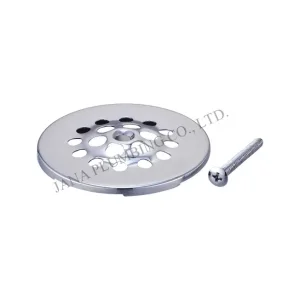
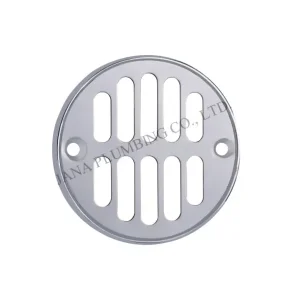
The flow capacity of a non-pop-up drain is governed by its strainer plate aperture design. High-performance models (such as the 19-hole pattern or offset slotted grid configurations) balance swift volumetric water discharge with debris filtration.
Engineered grid patterns maximize the surface discharge rate to eliminate standing water in deep basin sinks while preventing large solid objects, rings, or paper towels from entering the sanitary drain line and causing downstream blockages.
CNC Thread Precision & Gasket Seals
Zero-leakage installation relies on precise thread geometry. Superior Chinese suppliers utilize automated CNC lathes to cut 1-1/4" NPSM (National Pipe Straight Mechanical) or G1-1/4" parallel threads with tight tolerances (Class 2A/2B fit).
Complemented by commercial-grade EPDM or food-grade molded silicone bevel gaskets, high-torque cast-brass locknuts ensure a permanent, vibration-resistant seal against porcelain, cast iron, glass vessel, and stainless steel sinks.
Technical Whitepaper Highlight: Overflow vs. Non-Overflow Sink Compatibility
A crucial specification when sourcing bathroom sink drains without pop-up is sink basin body architecture. Sinks with built-in internal overflow channels require drain bodies manufactured with dedicated side overflow ports. Sinks without internal overflows (such as modern vessel sinks, natural stone basins, or glass bowls) require fully sealed solid body drain tubes to eliminate water leakage onto vanity subfloors.
| Specification Parameter | Commercial Grid Strainer (Non-Pop Up) | Standard Mechanical Pop-Up Drain | Industry Standard Compliance |
|---|---|---|---|
| Primary Material | Solid Brass (C37700) / Stainless Steel 304 | Forged Brass Body / Plastic Linkage Rods | ASTM B124 / ASTM B584 / AISI 304 |
| Mechanism Type | Fixed Perforated Grid / Open Waste Outlet | Mechanical Lift Rod / Push Button Click-Clack | ASME A112.18.2 / CSA B125.2 |
| Sink Compatibility | Commercial, ADA Accessible, Public Facilities | Residential, Private Hotel Suites | ADA Section 606 Compliance |
| Flow Rate Efficiency | High Flow (12–18 GPM depending on grid area) | Restricted (4–8 GPM due to stopper resistance) | ASME Water Flow Standards |
| Maintenance Profile | Ultra-Low Maintenance; Surface Wipedown Only | High Maintenance; Frequent Linkage De-Clogging | Facility Operational Cost Reduction |
| Surface Finishes Available | PVD Chrome, Brushed Nickel, Matte Black, ORB | Electroplated Chrome, Brushed Brass, Satin Nickel | ASTM B117 96-Hr Salt Spray Certified |
Macro Industry Solutions: Targeted B2B Applications
Customized drain system configurations designed to meet specific engineering demands across diverse commercial environments.
Public Infrastructure & Transit Terminals
Airports, train stations, and highway service plazas experience millions of daily users. Open grid strainers eliminate standing water overflow risk while providing vandal-proof security against mechanical tampering.
Healthcare & Medical Laboratories
Hospitals and surgical wash stations require non-stagnant, hygienic drainage. Solid brass chrome-plated non-pop-up drains prevent water accumulation where bacteria like Legionella or Pseudomonas could proliferate.
Hospitality & Luxury Hotel Chains
Bespoke boutique hotels leverage ultra-sleek PVD Matte Black or Brushed Gold grid drains. Combined with minimal vessel sinks, non-pop-up drains deliver sophisticated Scandinavian aesthetics with flawless functional reliability.
Educational & Student Housing Projects
University dormitories require heavy-duty, tamper-resistant fixtures. Thick-flange brass grid strainers withstand heavy usage and prevent students from blocking sink drains intentionally or accidentally.
China Sourcing Architecture & Dual-Origin Manufacturing Strategy
How modern Chinese sanitary ware suppliers are mitigating global tariff volatility while delivering uncompromised OEM customization.
Yuhuan Hub Integration & In-House Capability
China's Yuhuan region in Zhejiang is globally recognized as the capital of brass valve and sanitary plumbing manufacturing. Leading factories operate completely vertically integrated facilities. Raw brass rod extrusion, heavy hydraulic forging, precision CNC turning, automatic robotic polishing, electroplating, and hydrostatic leak testing are executed within a unified industrial complex.
This end-to-end control allows Chinese manufacturers to offer rapid OEM product prototyping (taking client 2D/3D CAD drawings to functional sample prototypes in under 15 days) while maintaining strict SPC (Statistical Process Control) over micro-inch surface finishes and thread tolerances.
Dual-Origin Sourcing: China HQ + Southeast Asia Expansion
To provide global procurement managers with supply chain security against anti-dumping duties, section 301 tariffs, and geopolitical shifts, premier Chinese manufacturers have expanded production operations into Southeast Asia.
For instance, operating dual manufacturing bases—such as a primary R&D headquarters in Zhejiang, China, alongside a fully certified satellite production factory in Thailand (e.g., Kabinburi Industrial Zone)—enables major importers to flexible-source orders. Importers benefit from Chinese technical engineering expertise while enjoying favorable tariff origin classifications for North American and European shipments.
Global Certification Standards & Quality Assurance Roadmap
Rigorous testing methodologies ensuring zero-defect manufacturing for international trade compliance.
cUPC & IAPMO Certification
Compliance with ASME A112.18.2 / CSA B125.2 standards is mandatory for North American building codes. Certified Chinese manufacturers undergo quarterly unannounced third-party audits by IAPMO R&T to maintain official UPC/cUPC product listings.
Corrosion & PVD Finish Testing
Every batch of finished components undergoes continuous CASS (Copper-Accelerated Acetic Acid Salt Spray) and standard neutral salt spray testing (ASTM B117) exceeding 96 hours to ensure finishes resist pitting, tarnish, and chemical degradation.
Hydrostatic Pressure & Thread Testing
Drain bodies and tailpieces undergo 100% pneumatic bubble testing and 50 PSI hydrostatic pressure testing to verify structural wall integrity, sound casting density, and absolute seal tight tolerances before master carton packaging.
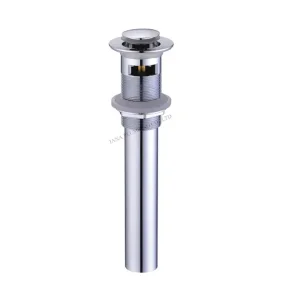
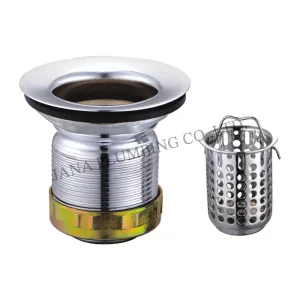
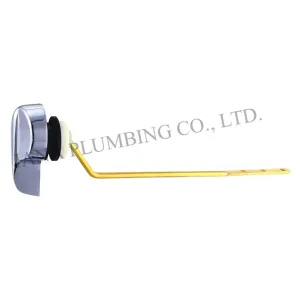
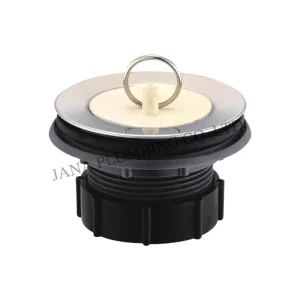
Drainage Accessories, Pop-Up Assemblies & Specialized Hardware
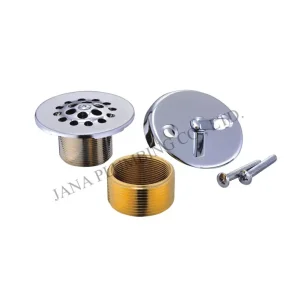
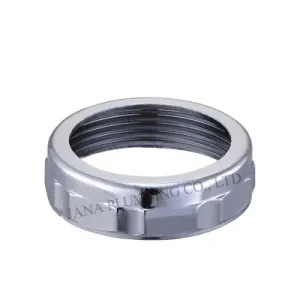
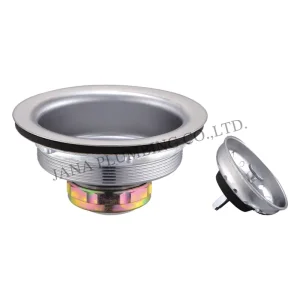
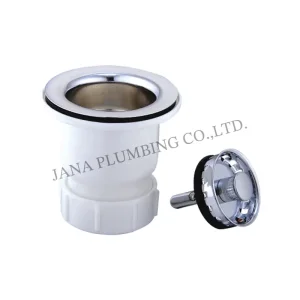
Explore our expanded catalog of brass pop-up assemblies, junior strainers, levers, and replacement fittings engineered for global distributors.
Frequently Asked Questions for B2B Importers & Specifiers
Expert answers regarding production capabilities, code compliance, custom packaging, and order logistics.
A bathroom sink drain without pop-up (often referred to as a grid strainer or open waste assembly) features a stationary perforated top plate that allows water to flow continuously into the drain line. Unlike pop-up drains, it has no internal stoppers, spring toggles, or mechanical lift rods. This design is preferred in commercial, public, and hospitality projects to prevent sink overflow tampering, eliminate hair clog buildup, and conform to ADA accessibility regulations.
If your sink basin has an integrated internal overflow channel built into the ceramic or porcelain body near the rim, you must specify a drain body with pre-machined side overflow slots. If your sink basin is a solid vessel (such as glass, natural granite, metal, or non-overflow porcelain), you must specify a solid body drain tube without overflow ports to prevent water from leaking onto the interior cabinet floor.
Yes. Our commercial brass grid strainers and non-pop-up lavatory drains are engineered to conform with ASME A112.18.2 / CSA B125.2 plumbing codes. Products can be ordered with official UPC/cUPC certification listings issued by IAPMO R&T, as well as lead-free compliance documentation under California AB1953 and NSF/ANSI 61 standard.
We offer comprehensive surface finishing technologies in-house, including electroplated Polished Chrome, Brushed Nickel (PVD), Matte Black (Electro-coating), Oil Rubbed Bronze, Brushed Gold (PVD), and Antique Brass. All finishes are tested via CASS and 96-hour neutral salt spray (ASTM B117) to ensure long-term resistance against peeling, scratching, and corrosion.
Standard MOQs for solid brass non-pop-up drains typically range from 500 to 1,000 pieces per SKU depending on custom finish specifications. Standard production lead time is 30 to 45 days after sample sign-off and deposit receipt. For urgent replenishment or high-volume contracts, expedited schedule slots are available.
Absolutely. We provide full OEM private-label branding services, including custom laser-etched logos on flange rims, customized color retail boxes, contractor polybags, and specialized barcode master carton packaging. Custom tailpiece lengths (e.g., 4", 6", 8", 12") and non-standard thread pitches can also be custom-engineered to your engineering drawings.
By maintaining operating facilities in both Yuhuan, China (for core R&D, tooling, and high-volume machining) and Kabinburi, Thailand (for secondary assembly and flexible shipping), we offer international buyers a resilient supply chain strategy. This dual-origin capability enables importers to optimize shipping routes and manage customs tariff structures while maintaining unified quality standards.