OEM Production Line
Engineered Plumbing & Fitting Hardware
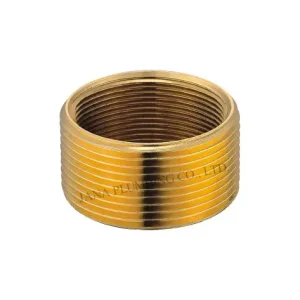
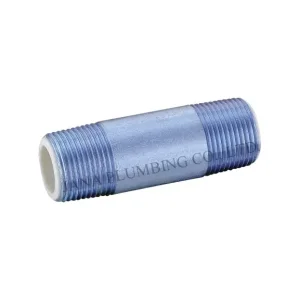
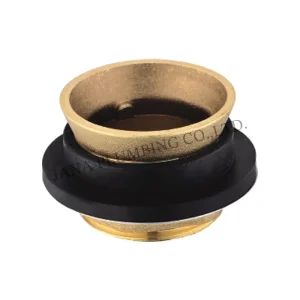
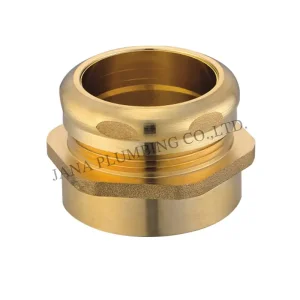
Precision hot-forged brass and electro-galvanized dielectric fittings, fabricated to ASME/ANSI standards and tested for high-volume commercial installations.
Supply Chain Architecture
Strategic Competitive Advantages of China Pipe Fitting Factories
How mature industrial clusters, closed-loop raw material ecosystems, and advanced robotics enable Chinese pipe fitting manufacturers to deliver micron-level tolerance and high-volume cost efficiency.
Aggregated Supply Cluster Ecosystem
Located in Yuhuan, Zhejiang—the brass capital of the world—factories benefit from instant accessibility to premium non-ferrous ingots, hot forging tooling, precision sand cores, and environmentally compliant electroplating within a 20-kilometer perimeter. This compression of raw logistics mitigates price swings and minimizes prototype lead times from months to under 14 days.
Robotic Machining & CNC Rotary Transfer
Modern Chinese pipe fitting facilities have transitioned from manual lathe threading to multi-axis CNC rotary transfer machines and robotic arm part-handling. This ensures threading consistency across ANSI B1.20.1 NPT, ISO 228-1 BSPP, and NPSM standards, guaranteeing that dielectric unions, trap adapters, and slip joint nuts achieve zero-defect sealing faces at high speeds.
Multi-Jurisdiction Dual Sourcing
To insulate North American and global enterprise clients from tariff dynamics and logistics bottlenecks, premier Chinese producers operate dual manufacturing architectures. Backed by corporate engineering in Zhejiang, China and modern manufacturing plants in Kabinburi, Thailand, global OEMs receive guaranteed supply elasticity and tariff mitigation options.
Engineering Deep-Dive
Metallurgical Formulations & Compliance Specifications
Pipe fittings operate under high hydrostatic pressures, vibration, and thermal fluctuations. Sourcing engineering requires strict metallurgical segregation between potable and non-potable circuits.
| Alloy Standard | Chemical Composition | Tensile Strength | Regulatory Scope | Typical Pipeline Application |
|---|---|---|---|---|
| C69300 / Lead-Free Brass | Cu: 73-77%, Si: 2.7-3.4%, Pb < 0.09% | ≥ 480 MPa | NSF/ANSI 61 & 372 | Potable water supply lines, meter couplings, water heater nipples |
| C37700 Forging Brass | Cu: 58-61%, Pb: 1.5-2.5%, Zn: Remainder | ≥ 390 MPa | ASME A112.18.2 / CSA B125.2 | Commercial closet spuds, waste trap adapters, drain couplings |
| C36000 Free-Cutting Brass | Cu: 60-63%, Pb: 2.5-3.0%, Fe ≤ 0.35% | ≥ 400 MPa | ASTM B16 / SAE J463 | Slip joint nuts, hex adapter bushings, threaded compression nuts |
| Zinc Alloy (Zamak 3/5) | Al: 3.9-4.3%, Cu: 0.75-1.25%, Zn: Remainder | ≥ 280 MPa | ANSI / OEM Sanitary Code | Die-cast slip joint friction nuts, non-potable secondary drains |
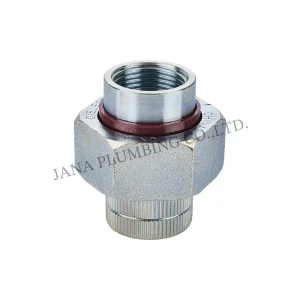
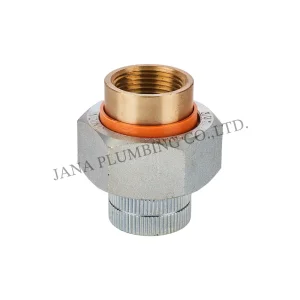
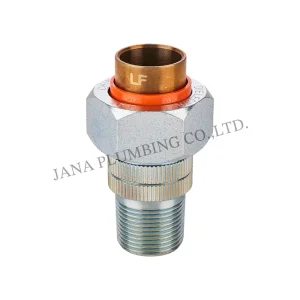
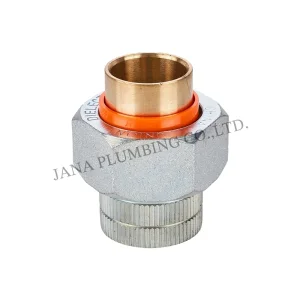
| Carbon Steel + EPDM/Nylon Insulator | Galvanized Steel Body with PPO/Polyamide Insulator | ≥ 510 MPa | ASSE 1079 Standard | Dielectric unions JN-3014 to JN-3017 for galvanic corrosion control |
Industry Horizon
Technological Trajectories Shaping Global Pipe Fitting Fabrication
The plumbing fitting sector is transforming from passive forging to smart, digitized component engineering driven by decarbonization, traceability mandates, and automated modular assembly.
1. Zero-Lead & Bismuth/Silicon Metallurgies
Global regulations (US Safe Drinking Water Act, EU RoHS, and California AB1953) are driving the phase-out of traditional lead-bearing brasses. Pipe fitting factories are adopting silicon-brass alloys (such as Ecobrass) and bismuth alternatives. This shift requires higher-torque forging presses and customized diamond-coated tooling to eliminate micro-cracking during thread cutting.
2. Digital Twin Mold Design & Optical Sorting
Leading factories deploy CAD/CAM finite element analysis (FEA) to evaluate metal flow vectors during closed-die forging. This prevents hidden voids and air pockets inside high-pressure dielectric bodies. Secondary processing is integrated with automated 3D optical vision sorters that inspect thread pitch, deburring, and wall concentricity at over 120 parts per minute.
3. QR Laser Etching for Material Origin Tracking
Global supply chain security requires lot-level traceability from raw billet heat to final destination. Advanced pipe fitting production lines now integrate high-speed fiber laser marking systems directly on the fitting hex flats, encoding the alloy melt date, factory certification ID, and UPC compliance listings directly into the metal body.
Application Engineering
Engineered Field Applications: Where Precision Counts
Plumbing fittings face real-world mechanical stress, temperature swings, and chemical corrosion across high-density residential, hospitality, commercial, and modular RV systems.
High-Density Hospitality & Multi-Family Residential
Multi-story apartments and commercial hotels require quiet, leak-free drainage and supply connections. Precision brass trap adapters (such as JN-3002-B-F and JN-3002-B-M) provide dependable mechanical seals between rough-in copper/PVC waste pipes and chrome-plated tubular sink waste assemblies, eliminating odor migration and wastewater seepage behind drywall.
RV, Marine & Prefabricated Modular Structures
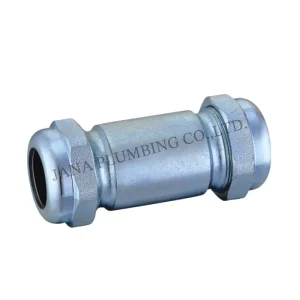
Recreational vehicles, luxury yachts, and modular homes face continuous road vibration, wave movement, and thermal contraction. Machined brass slip joint nuts and compression couplings (JN-3004, JN-3008) provide deep thread engagement and structural rigidity that prevent loosening and withstand line pressures up to 150 PSI.
Commercial Flushometer Water Closets
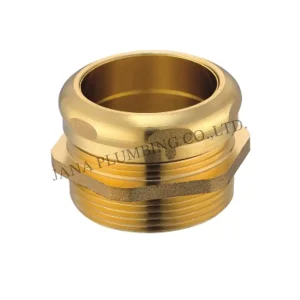
High-traffic restrooms in commercial airports, healthcare facilities, and educational institutions rely on flushometer valves that deliver rapid, high-volume flushes. Heavy-duty brass closet spuds with steel friction rings (JN-3001 and JN-3001-F) provide a durable seal between vitreous china bowls and flushometer supply connections, resisting gasket shearing.
Water Heating & Galvanic Dissimilar Metal Isolation
Connecting galvanized steel water heater tanks directly to copper supply lines creates a natural galvanic cell that quickly accelerates corrosion. Dielectric unions and dielectric nipples (JN-3012 through JN-3017) integrate internal polymer thermal barriers that stop electron flow between dissimilar metals, extending water heater tank service life beyond 12 years.
Enterprise Sourcing Matrix
Macro Solutions for Global Enterprise Sourcing Leaders
How large-scale distributors, major home improvement retailers, and plumbing OEM brands mitigate procurement risks, lower total landing costs, and streamline inventory workflows.
Vendor Consolidation & Full-SKU Container Optimization
Managing disparate manufacturers for closet spuds, dielectric unions, and brass strainers introduces logistical overhead and fragmented freight costs. Working with vertically integrated Chinese manufacturers allows enterprises to combine up to 16 major drain and fitting product families within single 40-foot HQ containers, reducing customs handling fees and maintaining inventory turnover.
Private-Label Retail Packaging & Barcode Integration
Wholesale plumbing distributors and DIY retail home centers require shelf-ready packaging formats. Our manufacturing plants provide full private-label support: color-coded polybags, tamper-evident retail clam shells, heavy-duty contractor bulk packaging, and pre-printed GS1-128 and UPC-A barcoding for seamless warehouse scans.
Predictive Raw Material Hedging Mechanisms
Copper and zinc metal markets can experience global commodity fluctuations. Tier-1 pipe fitting factories provide enterprise partners with copper index hedging programs, locking in scrap and pure ingot delivery contracts 3 to 6 months in advance. This insulates annual retail program pricing from spot market volatility.
Knowledge Repository
Frequently Asked Questions: Procurement & Engineering
Detailed answers to common engineering, compliance, material, and logistics questions submitted by plumbing product managers and commercial supply chain directors.
What are the key differences between NPT, NPSM, and BSPP threads on brass fittings?
NPT (National Pipe Taper) utilizes a 60-degree thread angle with a tapered cut that seals via mechanical thread interference, requiring PTFE tape or pipe dope. NPSM (National Pipe Straight Mechanical) uses parallel straight threads designed for mechanical fastening without wedging, relying instead on internal gaskets or O-rings to achieve water containment (commonly found in slip joint nuts and spuds). BSPP (British Standard Pipe Parallel) utilizes a 55-degree Whitworth thread profile and is predominantly standard across European and British Commonwealth markets. China export factories machine all three formats on precision multi-axis CNC machines to support your specific regional destination.
How do dielectric unions and nipples prevent galvanic corrosion in hot water tanks?
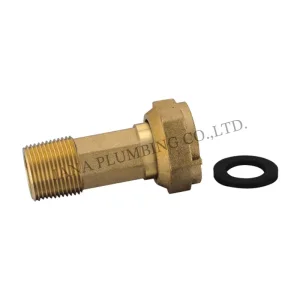
When dissimilar metals (such as a steel water heater port and a copper plumbing tube) connect in an electrolyte like municipal water, a galvanic battery is created, leading to accelerated electrochemical corrosion of the steel. Dielectric unions (JN-3014 through JN-3017) and dielectric nipples (JN-3012) feature a specially engineered thermoset plastic insulator (polyamide or PPO) coupled with an elastomeric gasket. This design completely breaks metallic electrical contact between the steel pipe body and the brass/copper tailpiece, stopping galvanic electron flow and ensuring compliance with the ASSE 1079 standard.
How do Chinese factories maintain compliance with California AB1953 and NSF/ANSI 372 lead-free laws?
Compliance begins with certified raw ingot sourcing. Foundries verify incoming copper, silicon, and zinc chemistry using optical emission spectrometers (OES) before casting. Lead-free production lines (working with C69300 or lead-free silicon alloys) are kept isolated from commercial alloy operations to prevent cross-contamination. Finished batches undergo acid-leach extraction testing in our internal laboratories and are submitted to accredited third parties such as IAPMO R&T for continuous UPC/cUPC verification, ensuring wetted surface lead content remains strictly under 0.25%.
Why choose a forged brass closet spud over a cast iron or cast bronze alternative?
Hot-forged brass closet spuds (such as model JN-3001) offer superior structural density and higher tensile strength than sand-cast bronze or iron parts. The hot-forging process compresses the metal's grain structure, eliminating porosity and micro-voids that can lead to pinhole leaks under pressure surges from commercial flushometer valves. Forged brass also maintains higher dimensional precision during thread cutting, ensuring uniform clamping torque against the porcelain china wall when compressed by the friction ring and rubber gasket.
What are the lead times for custom OEM tooling and high-volume container deliveries?
For custom OEM parts requiring new tooling dies (such as specialized adapter bushings or custom-profile slip joint nuts), our in-house tooling workshop completes CAD/CAM 3D molds and delivers first-article samples within 14 to 21 working days. Following customer approval and certification review, full production run lead times are typically 30 to 45 days. Re-order cycle times for standard SKUs can be reduced to 25 days by maintaining buffer stocks of forged blanks and packaging materials.
What options are available for dual-origin production between China and Thailand?
Our company operates a 28,400 m² global production network, consisting of our founding headquarters and tooling center in Yuhuan, China, and our automated 14,400 m² facility in Kabinburi Industrial Zone, Thailand. Buyers can manage their procurement by sourcing directly from China for domestic Asian, European, or South American markets, or routing North American-bound orders through the Thailand plant to mitigate trade tariffs and satisfy country-of-origin procurement rules.
Heavy Mechanical Line
Specialty Adapters, Couplings & Unions
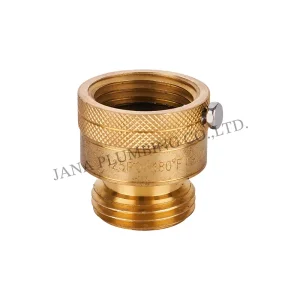
Discover our industrial series of dielectric unions, backflow-preventing vacuum breakers, and precision compression couplings engineered for residential and commercial pipelines.