
Commercial & Residential Strainer Assemblies
Precision-machined brass, stainless steel, and composite drainage components manufactured under ISO 9001 and certified to North American UPC/cUPC standards.
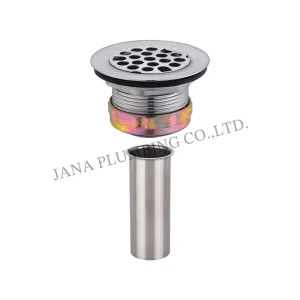
Engineering Deep Cup Sink Strainers: Cold-Rolled Threads vs. Cut Threads
In modern sanitary fitting manufacturing, the mechanical integrity of a kitchen sink strainer assembly relies heavily on thread geometry and deep-drawn cup wall uniformity. A Deep Cup Sink Strainer with Rolling Thread represents a significant evolutionary step over traditional cut-thread brass or thin-wall stamped strainers. Manufactured in specialized facilities in Yuhuan, Zhejiang, China, and Kabinburi, Thailand, these strainers are engineered specifically to solve chronic plumbing problems: locknut slippage, thread galling, seal displacement, and stress-corrosion cracking.
Traditional sink strainers often utilize lathe-cut threads or direct-cast threads. Cut threading removes material from the brass or stainless steel body, creating sharp micro-notches, stress concentration points, and tearing along the metal's grain boundary. Under continuous mechanical tightening torque (which frequently exceeds 35-45 N·m during professional plumbing installation), cut threads are vulnerable to micro-fractures and stripping. Conversely, cold thread rolling is a non-chip forming process. Two rotating hardened steel dies compress the deep cup's extended shank under extreme pressure, displacing the material into precise 1.5" NPSM (National Pipe Straight Mechanical) or 4.5" UNEF thread profiles.
Technical Gain Insight: Cold thread rolling reorganizes the internal metallic grain structure of C37700 brass or AISI 304 stainless steel along a smooth continuous contour, increasing thread surface hardness by up to 20-30% through work hardening while yielding a burnished root surface (Ra < 0.4 µm) that completely eliminates leak paths around the locknut.
Deep-Drawing Cup Mechanics & Hydraulic Volume Capacity
The term "Deep Cup" refers to an elongated vertical body profile, typically ranging from 2.5 inches to 3.25 inches in depth below the sink flange rim. Deep-drawn cups are formed via multi-stage hydraulic press operations. Using progressive compound dies, high-grade brass or stainless steel sheets are drawn down without localized thinning or micro-tearing of the metal wall. This deep cup volume yields three vital structural and hydraulic advantages:
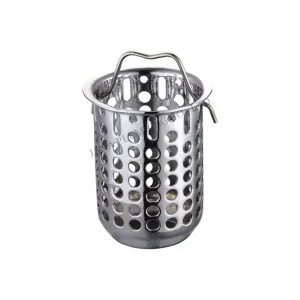
- Extended Debris Retention: Accommodates heavy-duty removable post-baskets (such as model JN-1116) without restricting gravimetric water flow rates, enabling continuous discharge even when filled with food waste.
- Optimal Gasket Compression Zone: The extended vertical cylindrical region allows uniform compression of dual-seal washers (molded rubber upper washer + die-cut friction ring) against the underside of stainless steel, cast iron, or composite granite sinks.
- Vibration Dampening for Garbage Disposers: High structural mass dampens harmonic resonance transmitted from adjacent high-torque garbage disposal units, preventing locknut back-off over long-term operation.
Why Specify Rolling Thread Deep Cup Strainers?
Designed for severe service applications in commercial food service, residential building projects, and mobile plumbing infrastructure.
Cold-Formed Grain Structure
Rolling thread dies form threads under high pressure without cutting fibers, preventing stress cracking, reducing installer torque requirements, and ensuring 100% leak-free locknut engagement.
Lead-Free Brass & 304 Stainless
Strict metallurgical control adhering to California AB1953 and NSF/ANSI 372 standards. Formulated with C37700 forged brass or heavy-gauge SUS304 for maximum corrosion immunity in acidic environments.
Universal Code Approvals
Fully compliant with ASME A112.18.2 / CSA B125.2 plumbing codes. Supported by valid IAPMO R&T listing documentation for quick clearance in North American retail and wholesale channels.
Dual-Origin Supply Chain
Produced across two strategic production centers: Yuhuan, Zhejiang (China headquarters) and Kabinburi, Prachinburi (14,400 m² Thailand plant), providing buyers with tariff mitigation and supply resilience.
Precision Automated Machining
Multi-axis robotic CNC turning centers and automated progressive stamping dies ensure sub-micron dimensional repeatability across multi-million piece OEM manufacturing runs.
PVD & Electroplated Finishes
Available in a full range of architectural finishes including Polished Chrome, Brushed Nickel, Oil Rubbed Bronze, Matte Black, and Physical Vapor Deposition (PVD) gold for luxury kitchen designs.
Engineering Comparison: Strainer Threading Technologies
Evaluating structural, hydraulic, and operational parameters between cold-rolled thread deep cup strainers and conventional cut-thread alternatives.
| Performance Parameter | JANA Cold-Rolled Deep Cup Strainer | Conventional Cut-Thread Brass Strainer | Economy Stamped Thin-Wall Strainer |
|---|---|---|---|
| Manufacturing Process | Multi-stage hydraulic deep draw + Cold roll forming | Gravity casting or hot forging + CNC lathe cutting | Single-stage light stamping + Cut/rolled thin wall |
| Thread Grain Integrity | Continuous work-hardened fiber flow; zero micro-notches | Severed material grain; microscopic stress raisers | Thin wall deformation under high locknut torque |
| Max Tightening Torque | > 45 N·m (High safety margin against stripping) | 25 – 30 N·m (Risk of thread shear) | < 18 N·m (Prone to collapse/thread jump) |
| Surface Roughness (Threads) | Ra < 0.4 µm (Ultra-smooth engagement) | Ra 1.6 – 3.2 µm (Rough surface, higher friction) | Ra 0.8 – 1.6 µm (Inconsistent thread profile) |
| Vibration & Shock Resistance | Exceptional (Resists garbage disposer resonance) | Moderate (Requires periodic retightening) | Poor (High leakage rate in high-use environments) |
| Compliance Certification | cUPC, ASME A112.18.2, CSA B125.2, AB1953 | Varies (Often non-certified generic import) | Non-standard code compliance |
China Factory Supply Chain Dominance & Dual-Origin Logistics Strategy
China's plumbing hardware industrial clusters—specifically located in Yuhuan, Zhejiang Province—represent the world's most concentrated ecosystems for non-ferrous metallurgy, precision brass forging, hydraulic forming, and surface finishing. Sourcing a Deep Cup Sink Strainer With Rolling Thread directly from an established manufacturer in Yuhuan provides international buyers with unmatched economies of scale, vertical integration, and advanced tooling engineering.
At JANA PLUMBING CO., LTD. (operating since 1998), the complete production matrix—from raw brass billet extrusion, forging, and hydraulic cup drawing to CNC machining, automated thread rolling, polishing, electroplating, and pressure testing—takes place within a single quality-managed infrastructure. This eliminates intermediate vendor markups, reduces lead times, and guarantees strict lot-to-lot traceability.
Mitigating Global Risk: The Thailand Manufacturing Hub
To navigate changing global trade policies, Section 301 tariffs, and anti-dumping regulations, JANA Plumbing expanded its footprint in December 2023 with the commissioning of Gateway Enterprise Corporation (Thailand) Co., Ltd. situated in the Kabinburi Industrial Zone, Prachinburi Province, Thailand. Spanning 14,400 square meters of modern factory space, the Thailand facility replicates the exact high-automation equipment, tooling setups, and quality assurance SOPs utilized at the Zhejiang headquarters.
Supply Chain Resilience Advantage: Global importers, major Home Center retail chains, and private-label plumbing brands can seamlessly source code-compliant deep cup strainers and drain assemblies from either China or Thailand under unified quality guarantees, enabling complete flexibility in customs optimization and risk mitigation.
Global Procurement Requirements: North American Plumbing Code Standards
Navigating international sanitary codes requires strict adherence to material safety and mechanical performance benchmarks. For plumbing products entering the United States, Canadian, and European markets, a deep cup sink strainer must clear rigorous testing protocols:
- ASME A112.18.2 / CSA B125.2 (Plumbing Waste Fittings): Mandates specific dimensional constraints, minimum wall thicknesses for brass and stainless steel bodies, thread engagement depths, and hydrostatic pressure performance without permanent deformation.
- NSF/ANSI 372 & California AB1953 (Lead-Free Compliance): Requires weighted average lead content of all wetted surfaces to be less than 0.25%. JANA Plumbing utilizes premium low-lead (C37700) and lead-free brass formulations independently verified by IAPMO R&T laboratories.
- ASTM B117 Neutral Salt Spray Corrosion Resistance: Premium decorative surface treatments (Brushed Nickel, Matte Black, Chrome) undergo 96-hour to 200-hour continuous salt spray exposure to ensure zero blistering, pitting, or color degradation in acidic sink environments.
Deployment Environments & Future Innovations
Where high-performance rolling thread deep cup strainers add measurable value to modern building architecture.
Heavy-Duty Commercial Kitchens
Food service establishments, restaurants, and hotel kitchens handle continuous hot water, grease, and acidic food scrap discharge. Deep cup strainers with extra-deep removable stainless baskets prevent main drain clogs while withstanding aggressive chemical sanitizers.
High-End Residential Undermount Sinks
Thick granite composite, quartz, and fireclay sinks require strainers with extended threaded shanks and heavy brass locknuts. Cold-rolled threads allow effortless tightening in tight cabinet under-counter spaces without cross-threading.
RV & Marine Plumbing Systems
Recreational vehicle and marine plumbing installations endure persistent road vibration and structural flexing. Rolling thread deep cup strainers maintain constant locknut compression seal integrity, eliminating low-level leaks during vehicle movement.
Emerging Trends in Sanitary Drain Engineering
The global sink strainer market is shifting rapidly away from cheap commodity plastics back toward high-durability, repairable metallic construction. Modern consumer preferences demand matching decorative finishes across kitchen faucets, soap dispensers, and sink strainers. Consequently, manufacturers are implementing Physical Vapor Deposition (PVD) coating technologies, which bond titanium nitride or zircon compounds at an atomic level to the stainless strainer body, producing ultra-hard surfaces that resist scratching from heavy cookware.
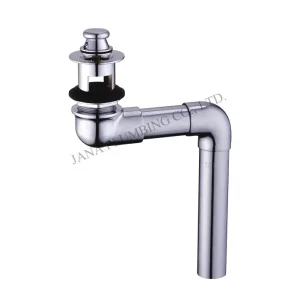
Furthermore, smart drainage integration—such as micro-perforated anti-clog basket geometries (like model JN-1009-2) and push-down stopper mechanisms—is replacing traditional rubber stoppers, delivering improved ergonomic utility for residential users.
Replacement Components & Specialty Plumbing Fittings
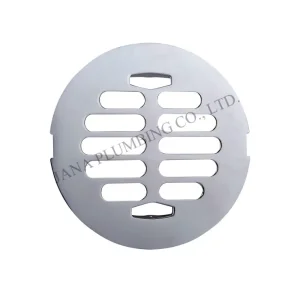
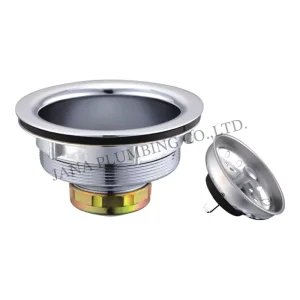
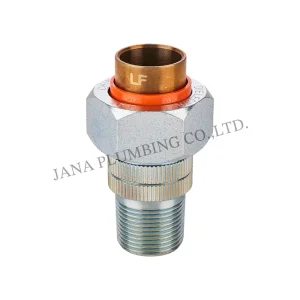
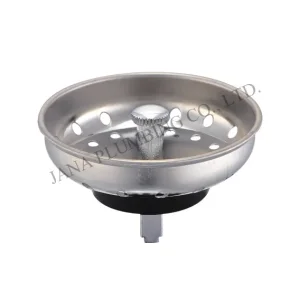
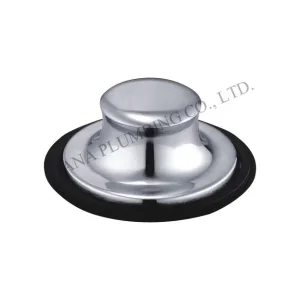
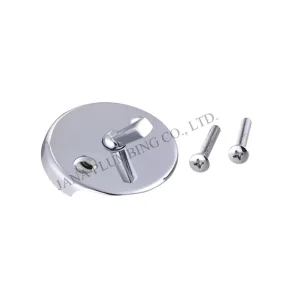
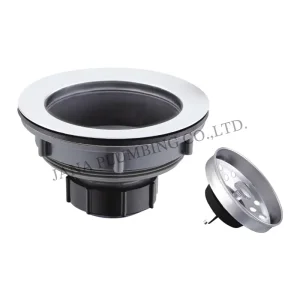
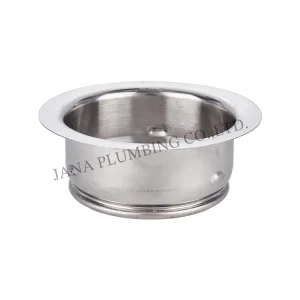
Explore our broader catalogue of disposer flanges, stoppers, overflow plates, dielectric unions, and specialized strainers.

Technical & Supply Chain Q&A for Plumbing Buyers
Direct engineering clarity regarding manufacturing specifications, custom OEM options, code certifications, and bulk shipping logistics.
Why are cold-rolled threads preferred over CNC-cut threads for deep cup sink strainers?
What are the key differences between your China factory and your Thailand manufacturing facility?
Which North American and European plumbing certifications do your products carry?
Can JANA Plumbing accommodate custom OEM drawings, custom finishes, and private label packaging?
What is the standard Minimum Order Quantity (MOQ) and lead time for wholesale strainer orders?
How do your deep cup strainers prevent leaks on thick granite or composite sinks?
Partner with China's Premier Strainer Manufacturer
Contact our technical engineering sales department to request product catalogs, CAD drawings, official IAPMO certification certificates, or factory audit schedules for our China and Thailand plants.