
China Drain Strainer Manufacturers & Factory
Precision Plumbing Engineering, Code-Compliant Brass Metallurgies, and Next-Generation Industry 4.0 Manufacturing Ecosystems
The Paradigm Shift in Global Sanitary Drain Manufacturing
An in-depth analysis of supply-chain evolution, material science compliance, and automated manufacturing dynamics across Chinese and Southeast Asian plumbing hubs.
In the contemporary global building hardware and plumbing fixtures sector, the role of structural drain assemblies—specifically kitchen sink strainers, lavatory pop-up assemblies, grid strainers, and floor waste outlets—has undergone a massive transformation. No longer treated as simple passive hardware commodities, modern drain strainers are now critical engineering components subject to rigorous hydraulic performance criteria, chemical leachability restrictions (such as AB1953 and NSF/ANSI/CAN 61 standard compliance), and strict dimensional tolerance benchmarks dictated by ASME A112.18.2 / CSA B125.2.
As international wholesalers, home improvement retail chains, and commercial plumbing contractors seek greater supply chain predictability, China drain strainer manufacturers have pivoted from labor-intensive manual assembly toward fully integrated Smart Manufacturing (Industry 4.0) protocols. Leading manufacturing entities, such as JANA PLUMBING CO., LTD. (operating specialized production facilities in Yuhuan, Zhejiang, China, alongside expanded offshore manufacturing in Kabinburi, Thailand), represent the vanguard of this technical shift.
This comprehensive technical whitepaper details the structural dynamics of China’s sanitary drain manufacturing sector, outlining how advanced metallurgical controls, multi-axis CNC machining, automated electroplating, and dual-origin production networks empower global buyers to secure high-gain competitive advantages in wholesale distribution and commercial contracting.
Featured Drain Strainer Assemblies & Components (Part I)
Explore our top-tier solid brass and stainless steel sink strainers, basket replacements, and pop-up assemblies engineered for global wholesale and OEM applications.
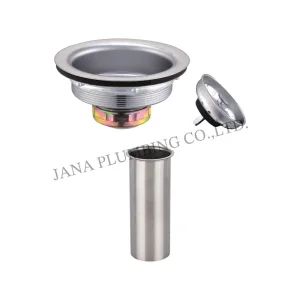
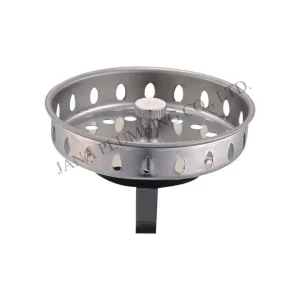
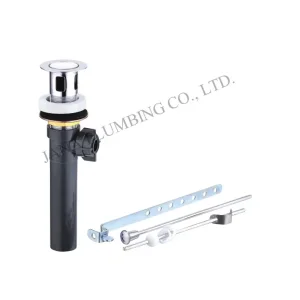
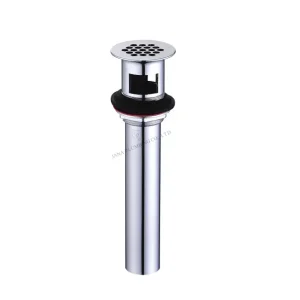
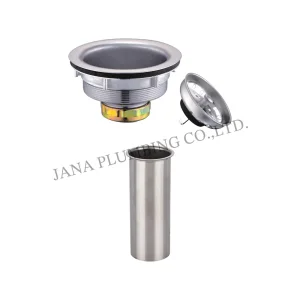
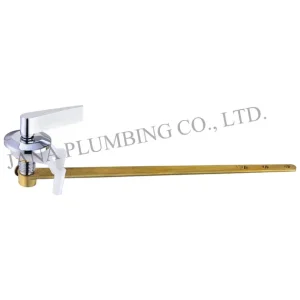
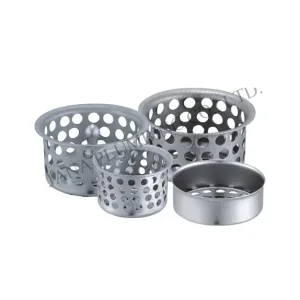
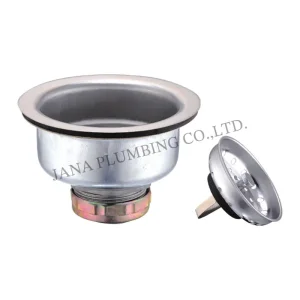
China Factory 4.0 & Global Supply Chain Resilience
How state-of-the-art automation, high-speed progressive die stamping, and multi-country operational redundancy mitigate procurement risks for international buyers.
SCADA-Integrated Machining
Utilizing high-precision multi-spindle CNC machining centers connected to central SCADA networks. Every thread—from NPSM mechanical straight threads to NPT tapered tailpiece joints—is machined within a ±0.01mm tolerance threshold to eliminate field installation leaks.
Automated Robotic Polishing
Surface roughness (Ra) directly impacts corrosion resistance and finish adhesion. Multi-axis robotic arms perform controlled abrasive belt and disc grinding, guaranteeing an ultra-smooth mirror substrate prior to nickel-chrome or PVD electroplating processes.
Dual-Origin Production Strategy
To provide geopolitical insulation and optimize tariff structures for Western importers, primary manufacturing in Yuhuan, Zhejiang is complemented by a 14,400 m² automated production facility in Kabinburi Industrial Zone, Thailand (Gateway Enterprise Co., Ltd.).
End-to-End Vertical Manufacturing Integration
The core advantage of China’s leading drain strainer factories lies in complete vertical consolidation. Rather than relying on third-party sub-assembly subcontractors, advanced manufacturers handle the full material life cycle in-house:
Metallurgical Forging
Solid brass ingot melting, continuous casting, and hot hydraulic forging of heavy-duty strainer bodies (e.g., JN-1001 and JN-1007 series).
Progressive Metal Stamping
High-tonnage automatic presses stamped stainless steel 304 wire mesh baskets, deep cups, and crumb catchers with micron-level hole pitch uniformity.
Thread Rolling & Machining
Specialized rolling thread machinery (such as used in the JN-1016 deep cup series) ensures maximum tensile resistance against overtightening.
Electroplating & PVD Finish
Multi-layer electro-deposition featuring acid copper, semi-bright nickel, high-sulfur nickel, and bright chrome, surviving 24-hour CASS salt spray testing.
Global Industry Trends & Sourcing Dynamics
Understanding shifting buyer preferences, regulatory evolutions, and regional engineering specifications in North America, Europe, and Asia-Pacific.
Global procurement strategies for sanitary hardware are rapidly evolving. Category buyers across big-box home centers, commercial plumbing supply distributors, and original equipment manufacturers (OEMs) face a complex matrix of engineering and environmental requirements:
1. The Regulatory Drive Toward Lead-Free Alloys
With strict enforcement of California AB1953, Vermont Act 193, and the federal Safe Drinking Water Act (SDWA) in North America, plumbing components that interface with potable water or kitchen sink environments must strictly limit weighted lead content to <0.25%. China’s premier factories utilize certified C37700, C36000, or CW617N low-lead brass formulas, subjected to X-ray Fluorescence (XRF) spectrographic verification on every heat lot before forging.
2. Decorative Finish Cohesion Across Kitchen & Bath Suites
Modern architectural design trends favor cohesive aesthetic finishes. A drain strainer can no longer exist solely in standard polished chrome. Today's commercial markets require custom Physical Vapor Deposition (PVD) finishes, including Matte Black, Brushed Gold, Oil Rubbed Bronze, Satin Nickel, and Gunmetal Gray. Achieving exceptional finish adhesion on deep-drawn stainless steel baskets or heavy cast brass locknuts requires specialized pre-treatment degreasing and ultrasonic cleaning stages.
3. Commercial vs. Residential Structural Design Differentiation
- Residential Applications: Demand deep basket strainers with post-style or stick-style basket stoppers (such as JN-1111 or JN-1009-T) that permit positive water sealing alongside easy debris removal.
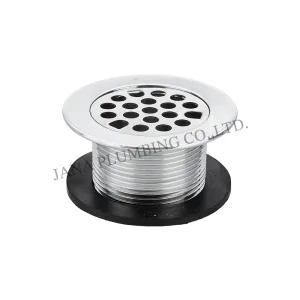
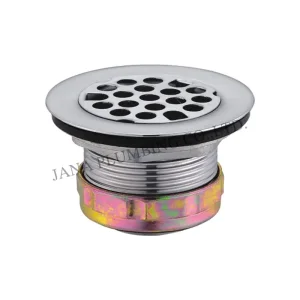
- High-Traffic Commercial / Institutional Kitchens: Demand heavy-duty grid strainers (e.g., JN-5004-3-CP or JN-9201-1) featuring non-removable strainers to prevent drain pipe blockage in restaurants, schools, and healthcare facilities.
- Bar & Prep Sink Installations: Utilize compact 2" or 2-1/2" openings, requiring specialized Junior Duo Bar Strainers (such as JN-1201 or JN-1202) designed for fast drainage and space-constrained undersink cabinetry.
Rigorous Metallurgical & Hydrostatic Testing Standards
Ensuring lifetime performance, code compliance, and structural integrity under demanding hydrostatic pressures and chemical exposure.
XRF Spectrographic Analysis
Every batch of raw brass rod or ingot is analyzed via X-ray Fluorescence spectrometry to confirm alloy composition (Cu, Zn, Pb, Fe, Ni) matches ASTM B283 specifications prior to high-pressure forging.
CASS & Salt Spray Resistance
Plating durability is verified using Copper-Accelerated Acetic Acid Salt Spray (CASS) testing (ASTM B368) for 24 hours, ensuring resistance against harsh household cleaning detergents and organic waste acids.
Torque & Thread Tolerance Gauging
Strainers undergo thread go/no-go gauge inspection alongside destructive torque testing to guarantee locknuts (such as die-cast zinc or heavy cast brass locknuts) do not crack during high-torque plumber installation.
Localized Application Scenarios & Installation Engineering
Customizing drain strainer geometries for residential kitchen remodeling, commercial food service, lavatory vanities, and RV/Marine plumbing systems.
The operational environment dictates specific material and mechanical configurations for drain strainers. As a leading manufacturer, JANA Plumbing engineers tailored solutions across distinct vertical markets:
A. Standard Residential Kitchen Sink Assemblies (3-1/2" Drain Openings)
The universal North American kitchen sink opening (3.5-inch diameter) demands a deep cup configuration or a rolling thread design (e.g., JN-1016 or JN-1009-T). These units incorporate neoprene or rubber washers alongside friction rings to form an airtight seal against stainless steel, composite granite, or fireclay sinks. Optional brass tailpieces (1-1/2" outer diameter, flanged) streamline direct connection to P-traps without extra adapters.
B. Commercial Food Prep & Restaurant Bar Sinks
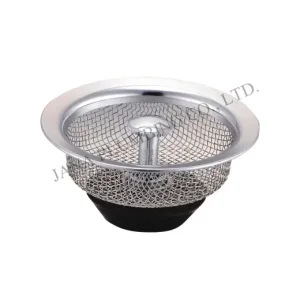
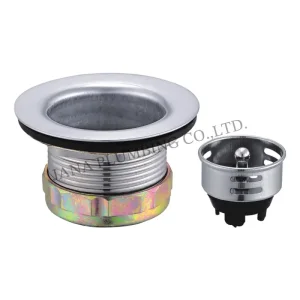
In high-density commercial kitchens, food waste volume requires Junior Duo Bar Strainers (JN-1201) or crumb cup assemblies (JN-1104). These feature removable stainless steel wire mesh baskets (JN-1110) that trap micro-particulates before they enter grease traps and municipal sewage lines, complying with local environmental health department regulations.
C. Commercial Lavatories & Public Washrooms
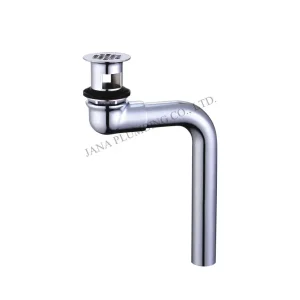
Public lavatories utilize offset lavatory drains (JN-5001) or grid drains (JN-9201-1) to ensure ADA (Americans with Disabilities Act) compliance under wheelchair-accessible sinks. The offset design redirects tailpiece piping toward the rear wall, maximizing undersink knee clearance while eliminating pop-up stopper vandalism risks.
D. Recreational Vehicles (RV) & Marine Vessels
Compact living quarters require shallow-cup drain strainers with weight-optimized brass or engineered polymer bodies. Corrosion resistance against vibration-induced stress and variable water chemistry makes high-grade brass/ABS pop-up assemblies (JN-5009) the preferred standard among global RV manufacturers.
Featured Drain Strainer Assemblies & Components (Part II)
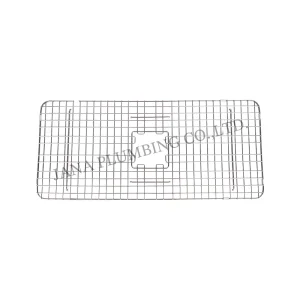
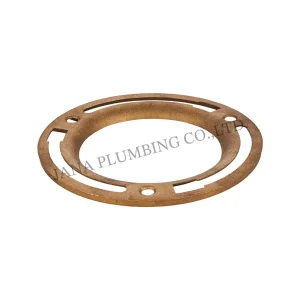
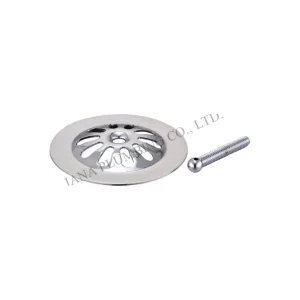
Explore our specialized lavatory grid drains, offset assemblies, closet flanges, and sink protectors tailored for global plumbing markets.
Frequently Asked Questions (FAQ) for Global Buyers
Expert engineering answers regarding certifications, alloy specifications, custom OEM tooling, and supply chain logistics.