Global Enterprise Procurement Strategy for Commercial Floor Strainers
In the contemporary sanitary plumbing supply chain, floor strainers, shower wastes, and secondary floor drain assemblies are no longer treated as passive hardware commodities. For enterprise procurement directors, mechanical engineering contractors, and national brand wholesale distributors, the floor strainer represents a mission-critical hydraulic interface. It is the final barrier shielding wastewater collection networks from solid debris, vermin backflow, sewer odor gases, and microbial colonization, while simultaneously providing aesthetic integration with high-end surface finishes.
Strategic Purchasing Insight: Failure in structural drain metallurgy or thread geometry costs ten to twenty times the unit procurement cost in warranty claims, water damage mitigation, and structural floor slab repair. True manufacturing quality is governed by metallurgical purity, wall thickness consistency, and hydrostatic sealing integrity.
1. Comprehensive Metallurgy: Solid Forged Brass vs. Stamped Stainless Steel
The manufacturing ecosystem in Yuhuan, Zhejiang—widely recognized as China's premier sanitary brass valve and drain capital—relies heavily on hot forging and automated multi-axis CNC milling. When selecting commercial floor strainers, engineers must weigh the distinctive benefits of heavy-duty brass against deep-drawn austenitic stainless steels:
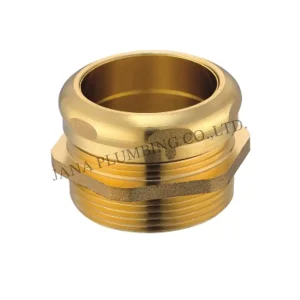
Hot-Forged Solid Brass (CW617N / C37700 / Lead-Free C27450): Brass remains the gold standard for high-traffic public installations, luxury residential bathrooms, and industrial RV wet rooms. The high density of hot-forged brass bodies eliminates micro-porosity defects common in sand casting. The superior machinability of brass ensures NPSM and NPT threads lock into sub-floor drain risers with micron-level concentricity, creating a leak-proof seal that endures decades of thermal expansion and contraction cycles.
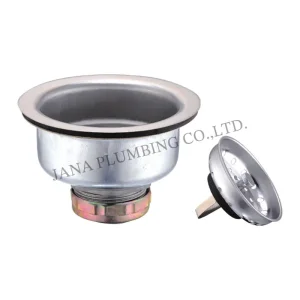
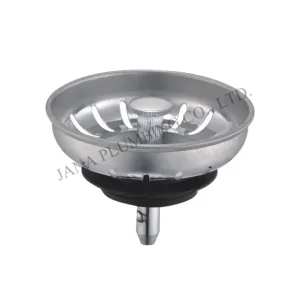
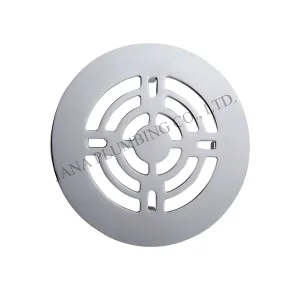
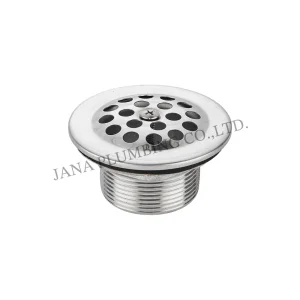
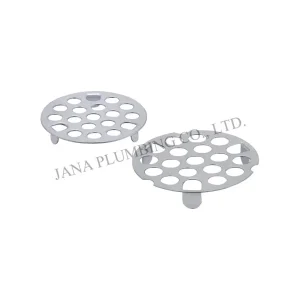
Austenitic Stainless Steel (AISI 304 and 316): Utilized predominantly in linear shower channels, snap-in strainer grids (such as the JN-6329 model), and food processing plant drains. Stainless steel offers high resistance to chloride stress-corrosion cracking and chemical cleaning agents. Deep-cup progressive dies stamped under 400-ton hydraulic presses deliver thin yet rigid structural flanges that sit completely flush with tile substrates, minimizing tripping hazards and grout line cracking.
| Engineering Attribute | Solid Forged Brass (JANA Standard) | Stamped Austenitic SS304/SS316 | Economy Zinc Alloy (Competitor Baseline) |
|---|---|---|---|
| Tensile Strength (MPa) | 380 – 440 MPa | 520 – 620 MPa | 180 – 240 MPa (Prone to brittle snap) |
| Dezincification Resistance | High (Alloy DZR Certified) | Immune to dezincification | Extremely poor (Fast failure in hard water) |
| Corrosion Resistance (Salt Spray) | ASTM B117 > 96 Hours (Acid Salt) | ASTM B117 > 240 Hours | ASTM B117 < 24 Hours (White rust pitting) |
| Thread Machining Tolerance | Class 2A / 2B Precision CNC Fit | Rolled thread (Standard compliance) | Die-cast coarse thread (Loose fit) |
| Target Applications | Heavy-Duty Commercial, RV, Residential | Modern Wetrooms, Snap-In Grids, Industrial | Low-cost temporary installations only |
2. Dual-Shoring Sourcing Architecture: China + Thailand Plant Resilience
One of the most consequential risks facing North American and European plumbing importers is geopolitical trade volatility and punitive tariff regimes (such as US Section 301 tariffs). Forward-thinking procurement strategies no longer rely on single-origin sourcing models.
Recognizing this structural industry shift, JANA Plumbing made a strategic multi-million dollar capital investment by inaugurating Gateway Enterprise Corporation (Thailand) Co., Ltd. in December 2023. Located in the Kabinburi Industrial Zone, Prachinburi Province, this 14,400 square meter sister facility replicates the exact high-precision tooling, progressive stamping dies, automated polishing cells, and automated packaging lines developed over nearly three decades in our Yuhuan headquarters.
This dual-origin capability empowers our global OEM partners to flexibly allocate production orders between China and Thailand. Buyers maintain identical drawing revisions, ISO 9001 quality assurance criteria, and UPC/cUPC master certificate listings while legally mitigating tariff exposure and strengthening overall supply chain redundancy.