
High-Performance Strainers & Commercial Drain Assemblies
Engineered for high-use public institutions, hospitality, and residential projects with strict code compliance.
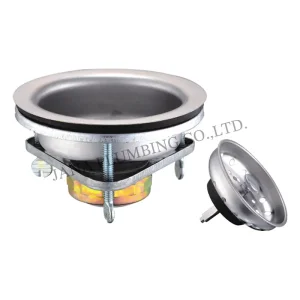
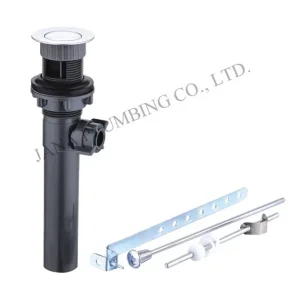
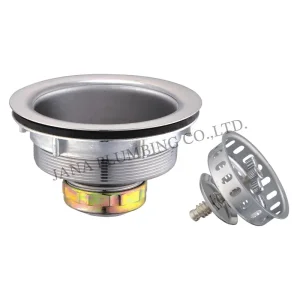
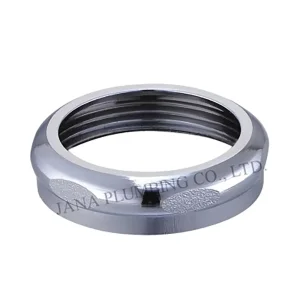
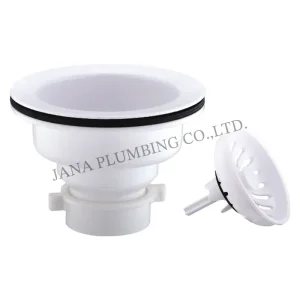
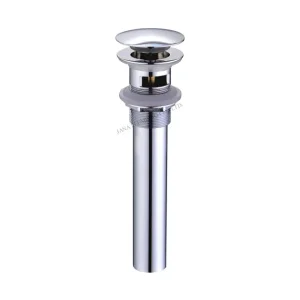
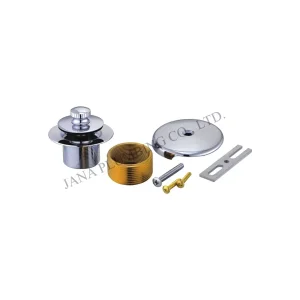
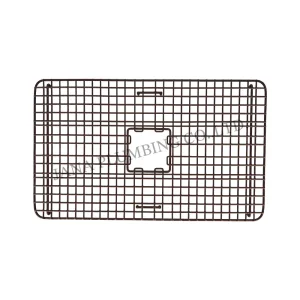
Global Commercial & Industrial Status of Grid Bathroom Sink Drains
An authoritative analysis on market expansion, code mandates, and the shift toward open-grid drainage solutions.
In modern commercial architecture and high-traffic public facility engineering, the humble lavatory drain has evolved from a basic mechanical fitting into a critical element of anti-vandalism design, hydraulic safety, and hygiene management. Among the various drain configurations—including pop-up assemblies, lift-and-turn stoppers, and umbrella grid drains—the fixed grid bathroom sink drain (often categorized as an open-grid strainer or anti-tamper lavatory drain) holds a dominant position across public, institutional, and commercial sector installations globally.
Unlike residential vanity sinks that require mechanical stoppers for water basin retention, commercial environments—such as international airports, educational campuses, healthcare facilities, sports stadiums, and transit hubs—prioritize continuous, uninterrupted drainage. Mechanical stoppers in public venues invite intentional overflow vandalism, water damage liability, and mechanical wear. Consequently, plumbing engineering specifications across North America (ASME A112.18.2 / CSA B125.2), Europe (EN 274), and the Middle East strictly specify fixed-grid, non-removable drain strainers for public lavatories.
The Dominance of China's Manufacturing Ecosystem
China has solidified its position as the ultimate manufacturing epicentre for precision sanitary ware hardware, accounting for over 68% of global export volumes in forged brass and stainless steel sink drainage components. Major industrial clusters in Yuhuan (Zhejiang), Kaiping (Guangdong), and Ningbo leverage fully integrated supply chains—from raw material copper/zinc alloy smelting and gravity die-casting to automated CNC precision turning, multi-axis robotic polishing, and advanced physical vapor deposition (PVD) plating.
Global original equipment manufacturers (OEMs), plumbing brand conglomerates, and wholesale distributors rely heavily on Chinese grid bathroom sink drain factories to deliver items that combine strict chemical alloy compliance (e.g., low-lead C37700 or AB1953 lead-free compliance) with cost efficiencies achieved through economies of scale and high factory automation.
| Commercial Metric | Fixed Grid Bathroom Strainer | Pop-Up Assembly Drain | Umbrella Touch-Top Drain |
|---|---|---|---|
| Primary Usage Context | Commercial, Institutional, Airports, Public | Residential Vanities, Master Baths | Boutique Hotels, Modern Residential |
| Overflow Risk Mitigation | Maximum (Non-closable, 100% continuous flow) | Low (User operable stopper plug) | Moderate (Requires manual press) |
| Vandalism / Theft Resistance | Exceptional (Fixed lock-nut / Security screws) | Poor (Removable stopper linkages) | Moderate (Threaded cap can be removed) |
| Maintenance & Lifecycle Cost | Ultra-low (No moving mechanical linkages) | High (Linkage calibration, pivot rod leaks) | Medium (Spring mechanism fatigue) |
| ADA Compliance Standard | Fully Compliant (No push/pull effort needed) | Requires compliant lever effort | Requires push force compliance |
Precision Manufacturing Capacity & Standards
Quantifiable benchmarks defining top-tier OEM/ODM factory outputs in China.
Material Science, Flow Dynamics & Structural Architecture
Technical breakdown of raw alloy selection, forging, machining tolerances, and fluid mechanics.
1. Metallurgical Alloy Composition and Lead-Free Integrity
The primary structural body of high-grade grid bathroom sink drains manufactured in China relies on heavy-duty brass forgings or cast copper alloys. Due to international potable water and sanitation regulations—such as the U.S. Safe Drinking Water Act, California AB1953, and NSF/ANSI 372 standards—factories have transitioned to specialized unleaded or ultra-low-lead brass formulations.
- C37700 / CW617N Hot Forging Brass: Highly favored for strainer body construction due to superior tensile strength, zero porosity, and resistance to stress corrosion cracking under thermal cycling.
- C36000 Free-Cutting Brass: Utilized for precision CNC threading on locknuts, slip-joint nuts, and tailpiece connectors, ensuring ultra-smooth thread engagement and leak-tight torque retention.
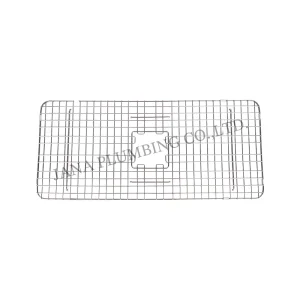
- SUS304 / SUS316 Stainless Steel: Used for stamped grid top plates and heavy-duty sink bottom grids (such as Model JN-9888-6-ABP). SUS316 provides ultimate chemical resistance against chlorine and acidic cleaning agents used in commercial sanitization.
2. Hydraulic Flow Rate Optimization and Anti-Siphoning
A critical engineering parameter for grid drains in commercial lavatories is the fluid discharge rate measured in gallons per minute (GPM) or liters per second (L/s). Standard ASME A112.18.2 testing mandates that a 1-1/4” (32mm) or 1-1/2” (38mm) commercial grid sink drain must evacuate basin discharge at a minimum rate without inducing back-pressure or siphon noise.
Chinese engineering teams employ computational fluid dynamics (CFD) simulation to optimize the surface area ratio of the grid perforations versus the solid brass cross-bars. By engineering 17-hole or 19-hole slot matrices with radiused rim chamfers, surface tension is minimized, permitting gravity-driven water flow rates exceeding 12.5 GPM to 18.0 GPM while simultaneously arresting debris larger than 0.25 inches (6.35 mm).
3. Anti-Vandalism and Structural Mechanics
In institutional settings, standard pop-up drain stoppers are easily unscrewed, stolen, or jammed by users. Professional China grid bathroom sink drain suppliers solve this through integrated structural design:
- Cast One-Piece Top Grid Flanges: The strainer grid is integral to the solid brass upper body, preventing cap removal without complete under-sink disassembly.
- Heavy-Duty Brass Locknut & Belleville Washer Sets: Designed to withstand up to 45 ft-lbs of installation torque, squeezing high-durometer EPDM/Silicone gaskets firmly against porcelain or cast iron sink undersides for permanent seal integrity.
- Extended Threaded Shanks: Extended 3-inch to 4-inch threaded shanks accommodate thick commercial vessel sinks, granite countertops, or ADA-compliant undermount lavatories seamlessly.
Technological Roadmap & Industry Outlook (2025–2035)
Strategic forecast of eco-sustainability, smart surface finishing, and automated manufacturing evolution.
PVD Physical Vapor Deposition
Transition from traditional electroplating to environmentally friendly PVD titanium coating. Yields extreme hardness (1800–2000 HV) and superior resistance to harsh commercial chemical cleaners in Matte Black, Brushed Brass, and Rose Gold.
Micro-Mesh Debris Capturing
Integration of secondary dual-stage removable hair traps beneath primary fixed brass grids. Specifically engineered for luxury hotel guest rooms to reduce maintenance plumber callouts while maintaining external code compliance.
Automated Robotic Polishing
Chinese factories are deploying 6-axis ABB and FANUC robotic arms equipped with force-torque sensors for 100% surface uniform grinding and polishing, eliminating human variance and reducing pre-plating defects to under 0.05%.
Dual-Origin Manufacturing Resilience
To hedge against global geopolitical tariffs and supply chain vulnerabilities, leading Chinese manufacturers (such as JANA Plumbing) have expanded automated production bases into Southeast Asia (e.g., Thailand), providing tariff-optimized shipping origins.
Hyper-Localized Application Scenarios & Engineering Field Matrix
Customizing hardware specifications according to architectural sector demands.
1. Public Infrastructure & Transit Hubs
Requirement: Extreme durability, vandal resistance, maximum drainage capacity.
Recommended SKU Specification: Solid forged brass grid drain with 17-hole security top plate, 1-1/4” 17-gauge brass tailpiece, heavy locknut, polished chrome plating meeting CASS 96-hour test standard.
2. Healthcare & Laboratory Facilities
Requirement: Infection control, smooth non-porous surfaces, chemical agent resistance.
Recommended SKU Specification: Heavy-gauge SUS316 stainless steel or cast brass grid strainer with anti-microbial PVD satin finish, seamless interior water paths, and zero-overflow (NOF) design to prevent bacterial stagnant water harborage.
3. High-End Boutique Hospitality & Resorts
Requirement: Aesthetic refinement, architectural metallic finishes, low-noise drainage.
Recommended SKU Specification: Brass round umbrella grid or decorative pattern strainers in Brushed Nickel (BN), Matte Black (MB), or Antique Bronze (AB), paired with color-matched slip-joint nuts (JN-3008) and decorative P-traps.
4. Educational K-12 & University Campuses
Requirement: ADA compliance, budget efficiency, tamper-proof locking mechanisms.
Recommended SKU Specification: Quick-connect cast brass grid assembly (JN-1011) or spin-and-lock strainer mechanisms (JN-1003) designed for rapid installation by facility maintenance crews.
Industrial Grade Sanitary Hardware & Replacement Components
Complete plumbing hardware catalog items designed for high-volume wholesale distribution and OEM integration.
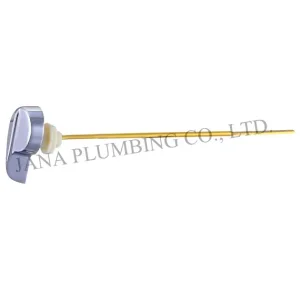
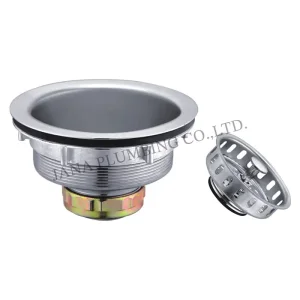
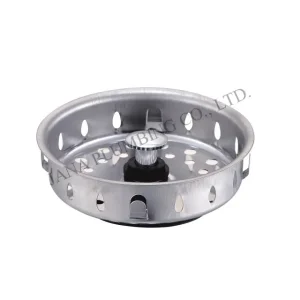
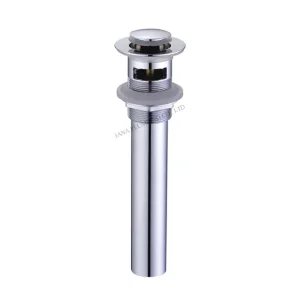
Macro OEM/ODM Solutions for Global Plumbing Brands
From 3D CAD modeling and custom forging die engineering to private-label packaging and certification support.
For international plumbing brands, OEM distributors, and big-box home improvement chains, sourcing grid bathroom sink drains from top-tier Chinese manufacturers involves far more than unit purchase pricing. It requires an integrated end-to-end engineering collaboration framework:
Step 1: Engineering CAD & CFD Simulation
Clients submit initial 2D blueprints or 3D SolidWorks files. Engineering teams analyze flow dynamics, thread tolerances (NPT vs. BSPT vs. NPSM), and material draw ratios to eliminate manufacturing stress points prior to tool cutting.
Step 2: Rapid Tooling & Metal Prototyping
Using 5-axis CNC machining centers and 3D metal printing technology, physical prototype samples in C37700 brass or SUS304 steel are delivered within 10 to 14 business days for hydraulic and physical dimensional validation.
Step 3: Quality Control & Code Certification
Pre-production samples undergo spectrographic alloy chemistry analysis, CASS 24-96 hour salt spray testing, hydrostatic pressure retention tests, and submission to IAPMO / CSA laboratories for official UPC listing authorization.
Step 4: Automated Assembly & Custom Packaging
Finished assemblies are lasers-etched with custom logos, batch numbers, and UPC barcodes before placement into retail clamshells, color display boxes, or bulk contractor multi-packs engineered for drop-shipping protection.
Deep Technical FAQ: Grid Sink Drains & Sourcing
Expert answers addressing compliance, metallurgy, installation mechanics, and international trade logistics.