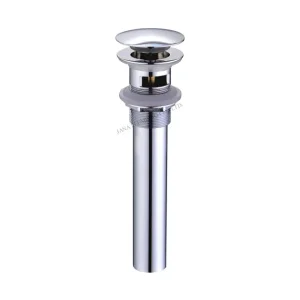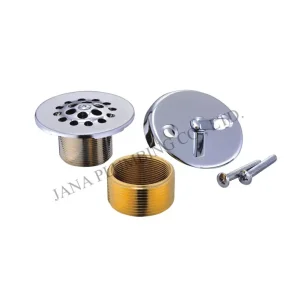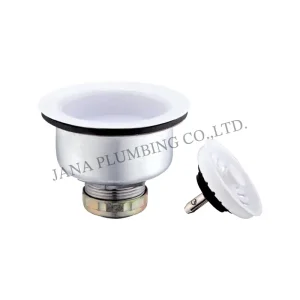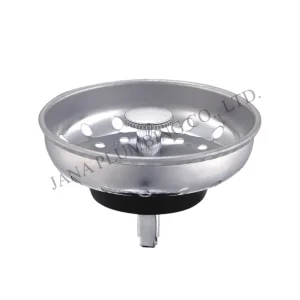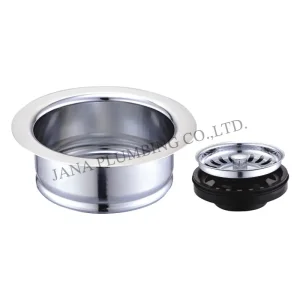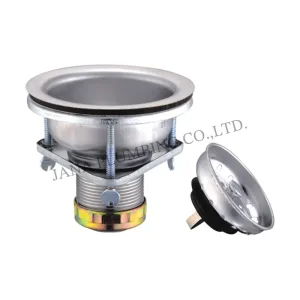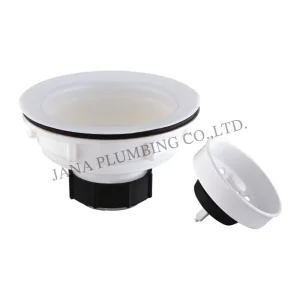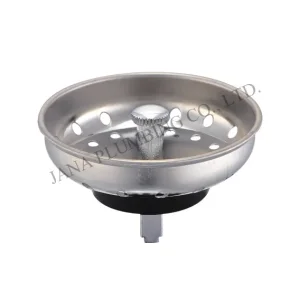
Featured Kitchen Sink Drain Components
Direct from Precision Factories in Yuhuan & Thailand — Tested for High Durability, Code Compliance, and Fast Installation
1. Macro Industry Solutions & Supply Chain Landscape
Analyzing China’s Sanitary Ware Cluster Dynamics, Metallurgical Standards, and the Shift to Dual-Origin Manufacturing
The global plumbing and sanitary ware industry is undergoing a structural transformation driven by stricter environmental standards, fluctuating material costs, and geopolitical supply chain realignments. Within this dynamic, evaluating a premier China kitchen sink drain supplier requires a technical perspective that moves beyond unit pricing to assess industrial cluster capabilities, raw material metallurgy, manufacturing tolerances, and compliance engineering.
China remains the undisputed global hub for sanitary brassware, stainless steel drainage solutions, and plastic injection-molded waste fittings. Regional specialization—most notably in Yuhuan and Taizhou, Zhejiang Province—provides an unparalleled industrial ecosystem. This hub integrates brass extrusion foundries, precision CNC machining complexes, electroplating and physical vapor deposition (PVD) lines, and automated packaging within a 50-kilometer radius. This geographic concentration drastically reduces component lead times, optimizes raw material supply chains, and accelerates iterative prototype development.
Dual-Origin Production Base
To mitigate international trade barriers and tariff vulnerabilities, leading manufacturers operate dual-hub infrastructures—anchored by mature Chinese engineering centers and complemented by modern ASEAN facilities in Thailand.
Metallurgical Precision
Strict control over copper-zinc alloys, lead leach rates, and corrosion resistance. Utilization of C37700, C36000, and lead-free CW617N brass ensures compliance with rigorous international drinking water and wastewater standards.
Automated Quality Control
Deploying automated vision check systems, pneumatic pressure testing cells, and spectrographic material analysis ensures zero-defect rates across high-volume production runs destined for global markets.
Metallurgical Selection in Drain Hardware Engineering
A primary differentiator among kitchen sink drain manufacturers is material integrity. Kitchen sink drains operate in harsh chemical environments, continually exposed to hot grease, acidic food residues, caustic cleaning agents, and thermal shock. The structural longevity of a drain assembly relies heavily on chemical substrate composition:
| Material Grade | Chemical Composition | Mechanical Attributes | Primary Application Area |
|---|---|---|---|
| Solid Brass (C37700 / C36000) | Cu: 57-60%, Zn: Balance, Pb: < 0.25% (Lead-Free) | High tensile strength, superior thread precision, high dezincification resistance (DZR). | Premium residential & commercial heavy-duty strainers, commercial grid drains. |
| Austenitic Stainless Steel (AISI 304) | Cr: 18-20%, Ni: 8-10.5%, Fe: Balance | Exceptional pitting resistance, impervious to organic acids, high thermal threshold. | Deep-cup strainers, replacement baskets, garbage disposer flange sets. |
| Engineered Polymers (ABS / PVC / PP) | High-impact thermoplastic compounds | Corrosion-proof, lightweight, cost-efficient, resilient to chemical degradation. | Economy strainers, tray plug bar drains, residential undertank tubular waste fittings. |
2. Commercial Landscape & Code Compliance Certification
Navigating International Plumbing Codes, Standard Certifications, and Retail Chain Integration
For plumbing product importers, distributors, and private-label brand owners, procuring kitchen sink drains from a China supplier requires absolute clarity on regional regulatory compliance. Distributing non-compliant plumbing hardware risks severe operational, legal, and commercial penalties—including retail rejection, customs impoundment, and costly liability claims from property water damage.
Critical Global Certification Frameworks
- ASME A112.18.2 / CSA B125.2 (Plumbing Waste Fittings): The foundational safety and structural benchmark across North America. Regulates physical strength, thread dimensions, water flow rates, and seal integrity under hydrostatic pressures exceeding standard municipal water flow.
- Uniform Plumbing Code (UPC) & Canadian UPC (cUPC): Certified through IAPMO R&T, guaranteeing that sink strainers, deep cup drains, and tailpiece couplings conform to regional building codes across all 50 US states and Canadian provinces.
- AB1953 & NSF/ANSI 372 Lead-Free Directives: Enforces weighted lead content below 0.25% across all wet surface components, protecting potable and secondary kitchen water contact zones.
- EN 274 Standard (European Sanitary Hardware): Specifies dimensions, discharge rates, water seal depths, and structural testing for sink strainers and overflow assemblies entering the European Union.
Beyond baseline code approvals, high-volume retail chains and commercial plumbing distributors demand comprehensive supplier auditing—including BRC GS, ISO 9001 quality system certifications, and environmental management compliance. Aligning with an established manufacturer guarantees traceable material test reports (MTRs) and batch-specific pressure testing certificates for every shipment.
3. Manufacturing Process & Quality Engineering
Inside the Factory: From Hydraulic Forging to Advanced Surface Finishes
The manufacturing process of a premium kitchen sink drain is a multi-stage engineering cycle. Sub-standard suppliers rely on manual casting and crude thread cutting, which leads to pinhole porosity, thread binding, and early gasket failure. Industry-leading factories employ advanced automation and rigorous metallurgical controls across six core stages:
1. Hot Hydraulic Forging
Solid brass rods are heated to precise forging temperatures and pressed under multi-ton hydraulic pressure. This eliminates internal voids and creates a dense, uniform grain structure that resists corrosion and cracking.
2. Precision CNC Machining
Computer-controlled lathes shape mounting threads, locknut interfaces, and gasket seating faces to tolerances within ±0.02mm, guaranteeing a tight seal without binding.
3. Rolling Thread Technology
Instead of cut threads that weaken material walls, high-stress strainer bodies feature rolled threads. This cold-working process strengthens metal grain structures and produces ultra-smooth threads.
4. Automated Polishing & Finishing
Multi-axis robotic arms polish exposed flange surfaces to a mirror finish, preparing them for electroplating or PVD deposition without manual surface irregularities.
5. PVD & Decorative Electroplating
Advanced electrodeposition applies multi-layer nickel (12-15 microns) and chrome (0.25 microns) coats. Specialty finishes—Brushed Nickel, Oil Rubbed Bronze, Matte Black—utilize PVD technology for scratch resistance.
6. Pneumatic Pressure Inspection
100% of manufactured units undergo automated air-leakage testing at 0.6 MPa hydrostatic equivalent pressure before final packaging, ensuring zero field defects.
4. Application Scenarios & OEM Integration
Custom Engineering Solutions tailored for Commercial Kitchens, Residential Units, and Mobile RV Systems
Kitchen sink drain requirements vary significantly across installation environments. A standardized consumer-grade strainer will quickly fail in a high-volume commercial kitchen or a compact mobile RV installation. Leading manufacturers engineer specific product lines tailored to distinct operational demands:
A. High-Traffic Commercial Food Service & Hospitality
Commercial restaurant kitchens generate large volumes of food waste, hot grease, and aggressive chemical cleaners. Standard shallow-cup strainers quickly clog, backing up prep sinks and creating health hazards.
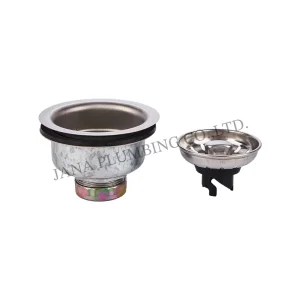
- Deep Cup Strainer Units with Rolling Threads (e.g., JN-1022): Engineered with expanded catch basins to trap solid food debris while maintaining continuous water drainage.
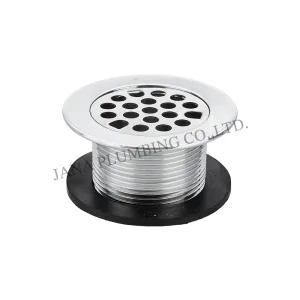
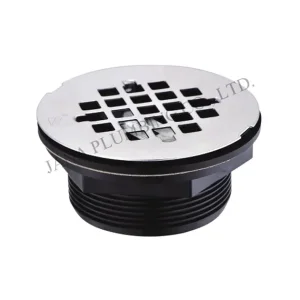
- Heavy-Duty Solid Brass Grid Drains (e.g., JN-9201-1): Perfect for public handwashing sinks and commercial prep stations where stoppers are prohibited by code to prevent sink overflow.
B. Residential Multi-Family & Custom Cabinetry Projects
Modern residential kitchens balance aesthetic design with functional space optimization beneath undermount granite, quartz, or fireclay sinks.
- Twist-Locking Basket Strainers (e.g., JN-1031): Features a positive ball-locking or twist-lock mechanism that forms a watertight seal for soaking dishes, preventing accidental drainage.
- Disposer Flange & Stopper Sets (e.g., JN-1302, JN-1121): Precision-matched garbage disposer flanges compatible with InSinkErator, Waste King, and continuous-feed waste disposal units, finished to match high-end designer faucets.
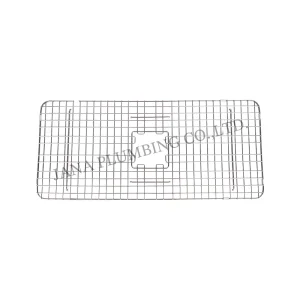
- Sink Bottom Protection Grids (e.g., SG17-28TS): Custom-fit stainless steel wire racks featuring rear drain access holes that protect expensive sink basins from impact scratches while optimizing water flow.
C. Recreational Vehicles (RVs), Marine, and Prefab Modular Housing
Space constraints, lightweight material mandates, and dynamic vibration profiles require specialized plumbing configurations in mobile applications.
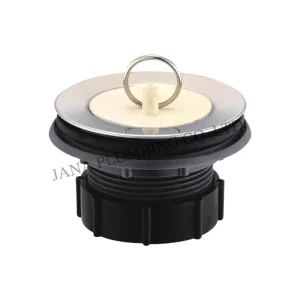
- Bar & Compact Strainer Assemblies (e.g., JN-1204, JN-1008-5-W): Lightweight 2" to 3.5" bar sink strainers engineered from impact-resistant polymers or lightweight brass alloys, designed to fit shallow basin depths.
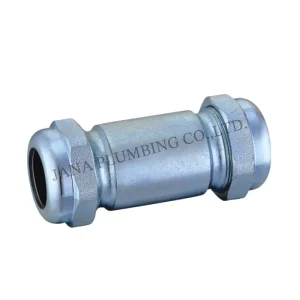
- Flexible Vinyl Hoses & Compression Couplings (e.g., JN-70001, JN-3004): Reinforced connection hoses that absorb vibration and structural shift during vehicle transit without cracking rigid PVC pipe connections.
5. Technology Roadmap & Future Industry Outlook
Next-Generation Plumbing Hardware: Eco-Metallurgy, Smart Drainage, and PVD Finishes
As smart building integration, environmental legislation, and architectural trends evolve, the design of kitchen sink drains and waste fittings continues to advance. Manufacturers investing in long-term R&D focus on four core technology shifts through 2030:
1. Zero-Lead & Bismuth Brass Alloys
Anticipating stricter global water purity laws, foundries are transitioning from traditional leaded brass to Silicon-Brass (C69300) and Bismuth-Bronze alloys, offering superior machinability alongside absolute zero-lead compliance.
2. Nanotechnology & Anti-Bacterial Coatings
Integrating hydrophobic and silver-ion antimicrobial coatings into strainer baskets and disposer stoppers prevents bio-film accumulation, suppresses drain odor, and enhances bacterial resistance.
3. IoT Smart Grease & Clogging Sensors
Commercial strainers are incorporating integrated micro-sensors that detect flow restriction, grease buildup, and overflow risks, relaying real-time maintenance alerts directly to facility management dashboards.
4. Sustainable Closed-Loop Manufacturing
Leading factories are adopting 100% closed-loop brass chip recycling systems, zero-discharge wastewater electroplating filtration, and solar-powered foundry heating to lower the carbon footprint per manufactured unit.
6. Technical Procurement Q&A (FAQ)
Direct Insights from Engineering and Export Compliance Teams
More Specialized Sanitary & Drain Assemblies
Explore Extended Categories: Umbrella Drains, Disposer Stoppers, Replacement Strainer Baskets & Conversion Kits