
Featured Kitchen Sink Screens & Strainer Assemblies (Part I)
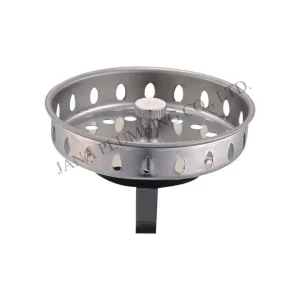
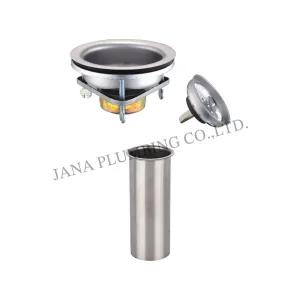
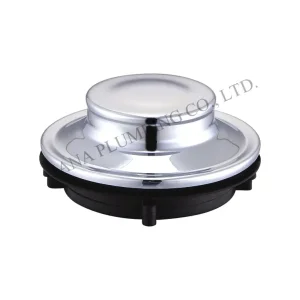
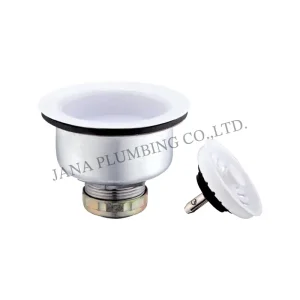
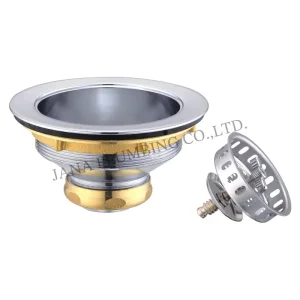
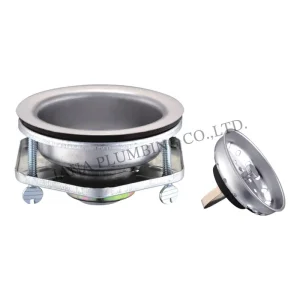
Directly manufactured to strict North American UPC/cUPC benchmarks and international standards. Explore our high-flow screening mechanisms, deep cup strainers, and disposer hardware engineered for zero backpressure and maximum service life.
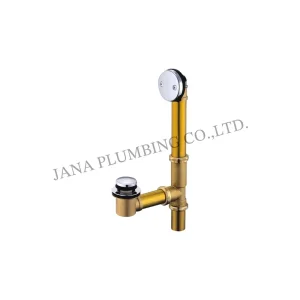
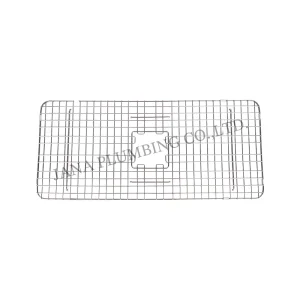
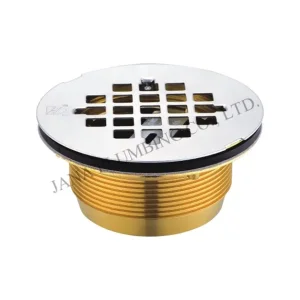
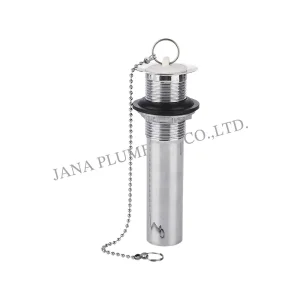
The Paradigm Shift in Kitchen Sink Screen & Strainer Manufacturing
Moving beyond rudimentary stamped metals: How modern metallurgical synthesis, CNC thread rolling, and automated fluid dynamics redefine commercial and residential kitchen sanitation worldwide.
Macro-Industrial Landscape: High-Throughput Screening in Modern Plumbing
In modern architectural engineering and multi-family residential construction, the kitchen sink screen is no longer regarded as a mere sacrificial commodity. It stands at the critical hydraulic juncture between commercial wastewater lines and high-value residential interior fixtures. Inadequate particulate capture leads directly to severe pipe scaling, enzymatic grease coagulation, and destructive sub-counter flooding.
Over 68% of post-installation maintenance callbacks across multi-family residential projects in North America and Western Europe stem from failing seal rings, stripped retaining locknuts, or perforated baskets buckling under hydro-mechanical stress. China's premier manufacturing ecosystem, spearheaded by advanced clusters in Zhejiang (notably Yuhuan's historic sanitary hub), has transformed this landscape through heavy hydraulic presses, robotic polishing, and metallurgical refinement.
Founded in early 1998, JANA PLUMBING CO., LTD. has engineered code-certified, lead-free brass and austenitic stainless steel sink strainers for retail conglomerates, hardware master distributors, and RV manufacturers. By maintaining end-to-end tooling control—from initial billet heating and cold extrusion to micrometer-level thread inspection—China's top-tier factories establish the benchmark for global fluid drainage integrity.
The Modern Factory Imperative: 4 Pillars of Excellence
- Hydraulic Uniformity: Preventing localized wall thinning during progressive deep cup draws.
- Metallurgical Purity: Maintaining lead content strictly below California AB1953 and NSF/ANSI 372 thresholds (< 0.25% wetted surface average).
- Dimensional Repeatability: Ensuring external threading matches ANSI B1.20.1 NPSM/NPT specifications without micro-burrs.
- Multi-Environment Sealing: Incorporating peroxide-cured EPDM, Santoprene™, and Buna-N elastomer gaskets resistant to thermal shocking (0°C to 100°C).
What Global Sourcing Directors Demand from a Sink Screen Factory
An analytical evaluation of procurement risk, total cost of ownership (TCO), testing protocols, and mechanical criteria required by Fortune 500 home improvement retailers and commercial distributors.
1. Hydrostatic & Mechanical Integrity
Commercial kitchen environments subject sink strainers to thermal cycling ranging from freezing defrost effluents to boiling grease flushes. Strainer bodies must withstand mechanical installation torque exceeding 65 Nm without thread galling, body warping, or flange cleavage.
Our deep-drawn brass bodies utilize continuous rolled threads rather than fragile cut threads, delivering superior shear strength and reliable sealing against stainless or fireclay sinks.
2. Precision Flow & Filtration Efficiency
A high-performance sink screen must strike a mathematically optimized balance: stopping food particulate down to 1.5mm while sustaining a minimum discharge velocity of 38 liters per minute under standard head pressure.
JANA’s computer-designed perforations utilize tapered, burr-free drainage geometries that resist biological film accretion and grease adherence, maintaining consistent drainage velocities even during heavy meal prep cycles.
3. Complete Regulatory Traceability
International customs authorities and municipal plumbing inspectors require unambiguous, batch-level proof of compliance. Factory documentation must encompass chemical spectrometry, ASTM B117 neutral salt spray test reports, and registered certificate numbers.
Every shipment from our Yuhuan and Thailand facilities is accompanied by standardized EN 10204 3.1 inspection certificates, ensuring immediate clearance during audits.
| Evaluation Parameter | CW617N / C36000 Solid Forged Brass | Austenitic SUS304 Stainless Steel | Engineered Polypropylene (PP/POM) |
|---|---|---|---|
| Tensile Strength & Shear Resistance | Extreme (>440 MPa); impervious to installation over-torque. | Very High (>520 MPa); exceptional tensile yield. | Moderate (35-70 MPa); susceptible to strip under severe torque. |
| Acidic & Detergent Resistance | High; superior when passivated or electroplated. | Superior; impervious to organic food acids and solvents. | Outstanding chemical resistance; zero oxidative rust. |
| Thermal Expansion Coeff. | 19.0 × 10⁻⁶ / K (Matches commercial brass traps). | 17.2 × 10⁻⁶ / K (Ideal for stainless steel sinks). | 80-120 × 10⁻⁶ / K (Requires flexible elastomer seats). |
| Acoustic Damping (Vibration) | Excellent; heavy mass dampens garbage disposer hum. | Moderate; standard acoustic profile. | Good acoustic isolation; low transmission mass. |
| Standard Certification Benchmark | UPC / cUPC / AB1953 Passed | ASME A112.18.2 / CSA B125.2 Passed | IAPMO R&T Listed / NSF Compliant |
Dual-Origin Manufacturing: China Headquarters & Thailand Facility
How JANA Plumbing mitigates international geopolitical tariffs, anti-dumping actions, and logistical choke points via our dual-plant production network across East and Southeast Asia.
Geopolitical Agility & Tariff Neutrality
Global supply chain directors cannot rely on single-origin sourcing in today's shifting trade climate. Section 301 tariffs, fluctuating freight rates, and localized shipping embargoes require manufacturers to provide operational flexibility without sacrificing manufacturing consistency.
JANA provides a seamless dual-origin structure. Importers can choose production origin based on import duties, supply chain requirements, and delivery schedules—all governed by unified ISO 9001 quality systems and standardized tooling sets.
From Raw Billet to Retail Packaging: Our End-to-End In-House Workflow
Hot Forging & Forming
Solid brass rods and 304 coils are hot forged or cold drawn under multi-ton presses to establish optimal grain density and zero porosity.
Progressive Stamping
Multi-stage progressive dies stamp out strainer baskets, perforated screens, and disposer stoppers with burr-free drainage geometries.
CNC Rolling & Machining
Precision multi-spindle CNC lathes roll threads and cut mating faces to within ±0.02mm, ensuring clean locknut engagement.
Robotic Polishing
Automated multi-axis polishing robots create mirror-finish reflective surfaces, eliminating micro-scratches prior to electroplating.
Electrochemical Plating & PVD
Advanced electroplating lines deposit multi-layer nickel and chrome, along with durable PVD finishes (Matte Black, Brushed Gold, Gunmetal).
Pressure Testing & Assembly
100% pneumatic leak testing at 0.6 bar, gasket seating verification, barcoding, and automated retail/contractor boxing.
Engineering Roadmap: The Next Generation of Kitchen Drainage Systems
Anticipating sanitary shifts over the coming decade: Smart sensor drainage, advanced physical vapor deposition (PVD), and antimicrobial nano-surfaces designed for high-hygiene food handling.
Hydrophobic & Oleophobic Nano-Coatings
Traditional stainless strainers suffer from persistent grease deposits and mineral water spotting. Our advanced coating laboratory is integrating fluoropolymer-free plasma nano-coatings directly over polished surfaces.
These ultra-thin coats yield a water contact angle > 110°, causing greasy wastewater to sheet off instantly, preventing biofilm formation and reducing municipal water usage during cleaning routines.
Next-Gen PVD Color Sintering
With modern kitchen sinks featuring dark granite composites, brushed brass faucets, and quartz workstations, traditional chrome finishes account for less than 50% of high-end retail demand.
Our vacuum PVD titanium-nitride sputtering technology creates surface hardness exceeding 2500 HV. This prevents abrasive scratching from steel cutlery, scrub sponges, and high-temperature cookware.
Acoustic Dampening & Smart Waste Gates
Integrating mechanical food waste disposers introduces heavy dynamic vibrations (2800 RPM) directly into the sink basket assembly. JANA's new vibration-damped disposer flanges utilize composite elastomer buffers.
This design cuts harmonic vibration transmission through the sink deck by up to 12 dB, creating a quieter culinary environment and protecting thin-gauge sinks from fatigue cracks.
Comprehensive Code Compliance: Eliminating Import Sourcing Risk
Plumbing components imported without accredited third-party verification risk immediate warehouse impoundment, code rejection, and retail liability. We provide complete institutional certification.
UPC & cUPC Listed
Uniform Plumbing Code accreditation issued via IAPMO R&T. Fully cleared across all 50 US States and Canadian provinces (File No. 6229 / 8175 / 12307).
ASME & CSA Standards
Engineered and mechanically batch-tested to ASME A112.18.2-2020 / CSA B125.2-20 for hydraulic flow capacity and mechanical pull-out strength.
AB1953 Lead-Free
Rigorous compliance with California Health and Safety Code Section 116875 and NSF/ANSI 372. Wetted surface lead content guaranteed < 0.25%.
ISO 9001:2015 & BRC
Internationally audited quality management framework ensuring complete raw-material lot traceability from melt furnace to final sealed pallet.
Specialty Filtration & Lock-Mechanism Strainers (Part II)
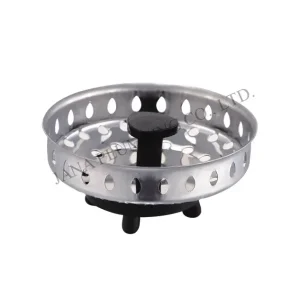
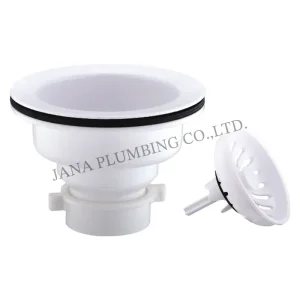
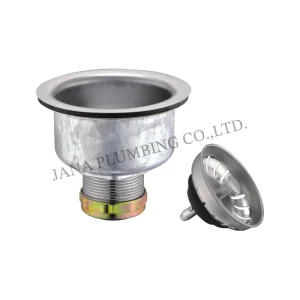
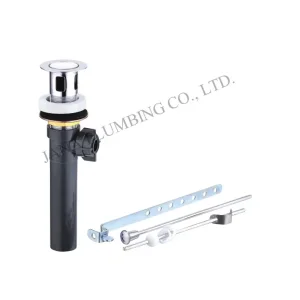
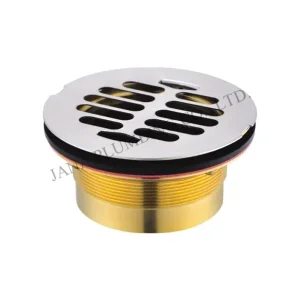
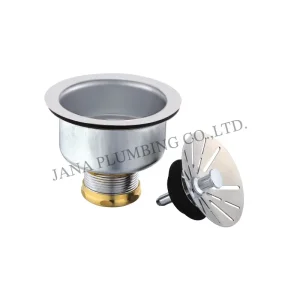
Explore our specialty commercial basket strainers, spring-loaded EZ-lock configurations, heavy-duty ball-bearing stoppers, and high-flow shower/lavatory drain fittings.
Frequently Asked Questions for Plumbing Importers
Direct technical clarifications on minimum order quantities, tooling lead times, lead-free brass formulations, and packaging options.
What are the exact dimensional standards for North American kitchen sink screens?
How does JANA ensure compliance with California AB1953 and NSF/ANSI 372?
Can buyers split production batches between your China and Thailand facilities?
What is the standard production lead time and typical Minimum Order Quantity (MOQ)?
What anti-corrosion test standards do your plated decorative finishes meet?
Do you offer OEM private labeling and barcoding for retail box programs?
Initiate Your Engineering Sourcing Audit Today
Partner with a 27-year manufacturing leader. Request our full 2026/2027 technical catalog, schedule an engineering review, or order production samples shipped directly from our China or Thailand facilities.