
Engineered Kitchen Strainers & Component Assemblies (Part I)
Explore our premier, code-compliant kitchen sink strainers, disposer flanges, and precision brass hardware engineered for North American and European commercial & residential distribution.
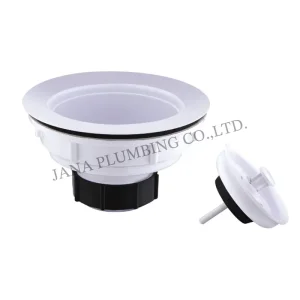
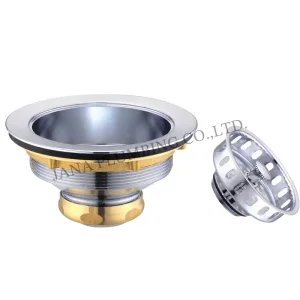
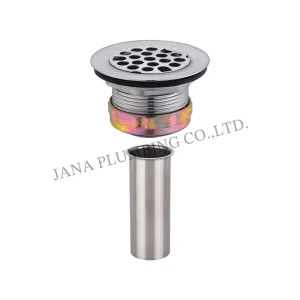
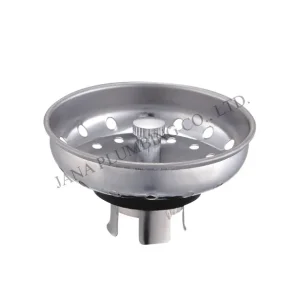
1. Global Commercial & Industrial Status: The Kitchen Strainer Ecosystem
In the global fluid management and architectural hardware sectors, the humble kitchen sink strainer acts as the primary defense mechanism for municipal drain lines and private waste-water infrastructure. As global construction, residential remodeling, and commercial hospitality sectors expand, demand for high-performance plumbing fittings has evolved far beyond basic utility. Today's commercial procurement managers, plumbing wholesalers, and OEM appliance brands mandate stringent metallurgical purity, physical endurance, and absolute leak prevention.
China remains the undisputed global epicenter for plumbing brass manufacturing, accounting for over 60% of international exports in drain bodies, tailpieces, and kitchen strainer assemblies. Operating from specialized manufacturing hubs such as Yuhuan, Zhejiang, leading manufacturers leverage end-to-end supply chain integration—from raw scrap refining and continuous gravity casting to 5-axis CNC machining, automated electroplating, and strict hydrostatic pressure testing.
Dual-Origin Strategic Manufacturing (China & Thailand)
To mitigate geopolitical tariff volatilities and protect international buyers from single-source disruption, forward-thinking manufacturers like JANA Plumbing operate strategic facilities across both China (Yuhuan, Zhejiang HQ) and Thailand (Kabinburi Industrial Zone). This dual-origin framework guarantees continuous supply security, seamless customs optimization, and uniform engineering compliance across all export destinations.
2. Enterprise Procurement Intent & Engineering Specifications Analysis
B2B buyers, institutional sourcing managers, and plumbing brand owners do not purchase kitchen strainers based on aesthetics alone. Procurement intent revolves around four critical engineering pillars: Metallurgical Integrity, Dimensional Standardizations, Thread Precision, and Surface Finish Resilience.
Lead-Free Brass Formulations
Utilizing premium CW617N, C37700, and HPb59-1 lead-free brass alloys complying strictly with US Public Law 111-380 and NSF/ANSI 372. Formulated to resist dezincification (DZR) and stress corrosion cracking in aggressive water chemistries.
Standardized Opening Geometry
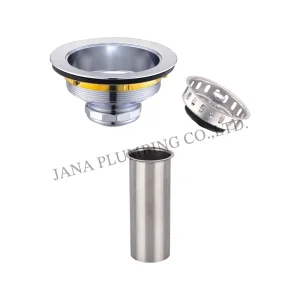
Precision-engineered for standard 3-1/2 inch (89-90mm) sink drain openings in North America and 110mm European sink bowls. Features 4-1/2 inch (114mm) top flange diameters for flawless seating against stainless steel, granite composite, and fireclay sinks.
1-1/2" NPSM / NPT Threads
Thread profiles are CNC machined to tight tolerances (Class 2A/2B fits), ensuring effortless mating with standard P-traps, continuous waste piping, and tailpieces without cross-threading or gasket extrusion.
Comparative Technical Matrix: Material Selection Guide
| Material Specification | Tensile Strength (MPa) | Corrosion Resistance | Typical Target Application | Compliance Standard |
|---|---|---|---|---|
| Solid Forged Brass (C37700 / DZR) | ≥ 380 MPa | Exceptional (High Chemical/Pitting Resistance) | Premium Residential & High-Traffic Commercial | cUPC, ASME A112.18.2 / CSA B125.2 |
| AISI 304 Stainless Steel | ≥ 520 MPa | Superior (Resists Acidic Food Wastes) | Commercial Kitchens & Food Processing Units | NSF/ANSI 61, ISO 9001 |
| AISI 316 Stainless Steel | ≥ 620 MPa | Ultra-High (Marine & Coastal Environments) | Industrial Food Prep & Marine RV Kitchens | ASTM A240 / EN 10088-2 |
| Engineered ABS / Polypropylene | ≥ 45 MPa | High Chemical, Vulnerable to High Heat | Budget Multi-Family Housing & OEM RVs | IAPMO Listed, ASTM D1784 |
3. Industrial Solutions & Structural Innovations in Kitchen Drainage
Preventing catastrophic water damage, foul sewer gas backflow, and food waste blockages requires advanced engineering at the sink interface. Chinese manufacturing leaders have moved far beyond basic stamping to introduce structural innovations that solve common plumbing failures:
Deep-Cup Stick-Post Basket Design
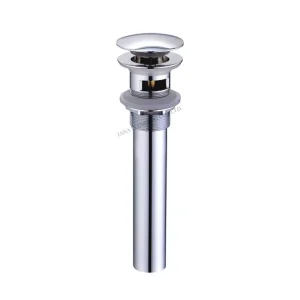
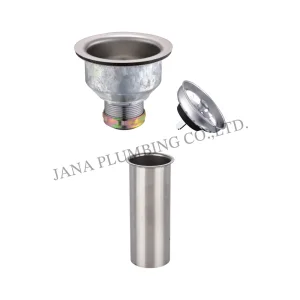
Traditional flat strainers clog rapidly, causing water pooling. The deep-cup stick-post mechanism (seen in model JN-1014-T) provides over 300% more filtration surface area. The central brass post allows users to toggle seamlessly between high-flow straining and positive rubber-seal water retention.
Vibration-Isolated Disposer Flanges
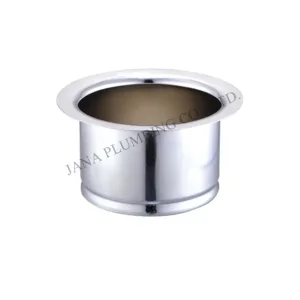
With garbage disposers generating up to 1,720 RPM of rotational torque, standard thin flanges crack over time. Heavy-duty replacement deep style disposer flanges (JN-1303-F) utilize reinforced brass walls (2.5mm thickness) with anti-vibrational rubber seats to withstand harmonic stress.
Triple-Gasket Leak-Lock Seals
Utilizing food-grade NBR rubber gaskets combined with non-hardening fiber washers, our locknut assemblies eliminate the requirement for messy plumber's putty, cutting down field installation time by 40% while preventing seal degradation.
4. Technical Roadmap & Future Outlook (2026–2030)
The global sanitary ware market is entering a era dominated by environmental compliance, smart automation, and advanced surface engineering. Over the next five years, China's kitchen strainer manufacturing ecosystem will focus heavily on three technology transitions:
Zero-Lead Bismuth & Silicon Brass
As global health standards tighten, legacy leaded brasses are being entirely phased out in favor of Eco-Brass alloys containing bismuth or silicon. These alloys maintain high machinability without compromising mechanical tensile strength or environmental safety.
PVD Physical Vapor Deposition
Replacing traditional wet electroplating, PVD vacuum coating applies atomic layers of Titanium Nitride (TiN) or Zirconium. This yields scratch-resistant, non-tarnishing finishes in Matte Black, Brushed Brass, and Rose Gold that pass 96-hour CASS salt spray tests.
Automated Robotic Grinding & Inspection
Implementation of 6-axis ABB robotic arms for body polishing combined with AI vision optical sensors guarantees 100% surface defect detection and micrometer-accurate thread tolerances across production batches exceeding 500,000 units per month.
5. Quality Assurance, Global Compliance & OEM Customization Support
Navigating international plumbing codes requires verified proof of compliance. Leading manufacturers undergo annual audits by independent testing bodies like IAPMO R&T, ensuring products conform to ASME A112.18.2 / CSA B125.2 plumbing waste fittings standards.
Rigorous QC Testing Protocols
Every production lot undergoes 100% pneumatic air testing (0.6 MPa) to check for body porosity, 100,000-cycle basket lock durability testing, and thread torque stress tests up to 45 N·m to guarantee zero installation cracking.
Custom OEM / ODM Branding
Full private-label capabilities including laser-engraved brand logos on sink flanges, customized barcode color boxes, blister cards for big-box retail, and custom tailpiece length configurations tailored to specific OEM plumbing kit assemblies.
Comprehensive Documentation
Providing complete supply-chain transparency with Certificate of Origin (Form E, Form F, Thailand COO), Mill Test Certificates (MTC) for brass alloys, and official cUPC listing documentation for seamless customs clearance.
Engineered Kitchen Strainers & Component Assemblies (Part II)
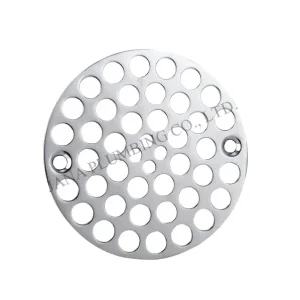
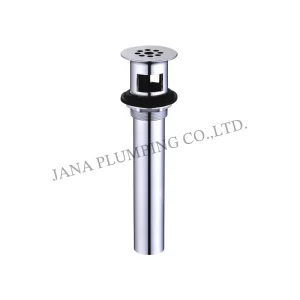
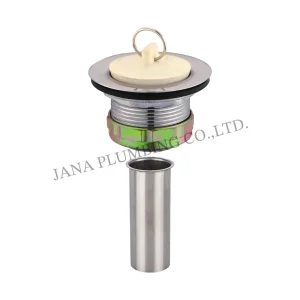
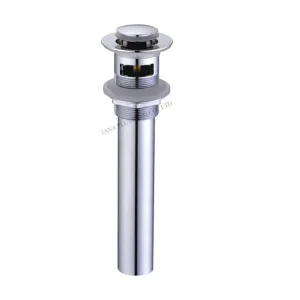
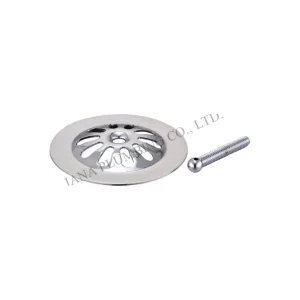
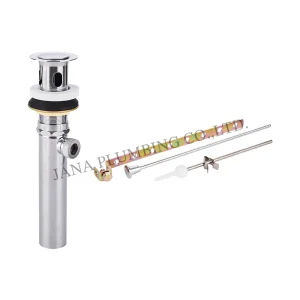
Browse our complete series of specialty grid strainers, bar sink assemblies, pop-up mechanisms, and overflow hardware built to industrial specs.
6. Technical FAQ: Sourcing & Engineering Guidance for Procurement Officers
Find direct engineering answers to common technical queries encountered when specifying and importing kitchen strainers from China.