Engineered Sanitary Ware & Drainage Systems

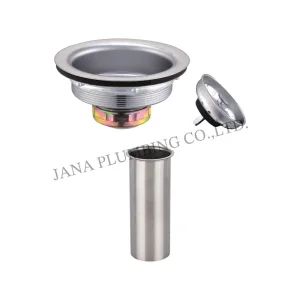
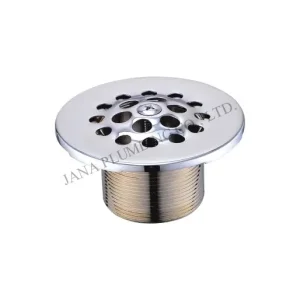
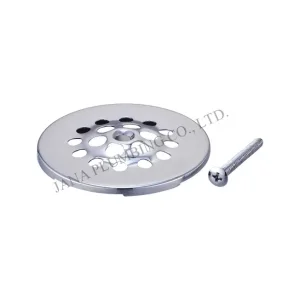
The Engineering Blueprint: Lavatory Grid Drains Without Overflow
In modern commercial plumbing architecture and high-end residential design, the selection of lavatory drainage systems has evolved from purely utilitarian water evacuation to critical structural integration. China lavatory grid drain without overflow manufacturers stand at the nexus of this transformation, combining high-grade metallurgic forging with advanced automated precision machining.
Why "Without Overflow" Matters in Modern Architecture
Standard lavatory sinks utilize an internal overflow channel cast directly into the porcelain or acrylic body to route excess water down the waste pipe. However, vessel sinks, glass bowl lavatories, solid-surface resin basins, and high-traffic commercial installations frequently omit this internal cavity for clean aesthetics, structural integrity, or hygiene reasons.
Installing a standard overflow-style drain into a non-overflow basin results in catastrophic water leakage, as the exposed side ports allow waste water to spill under the sink deck. Non-overflow grid drains features a solid, unslotted brass body that establishes an impenetrable hydraulic column between the basin outlet and the P-trap connection.
Vandal-Resistant & Open-Grid Hydraulic Mechanics
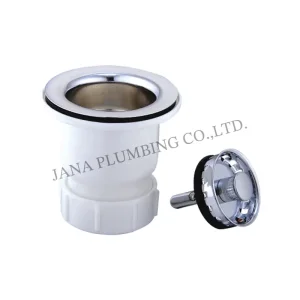
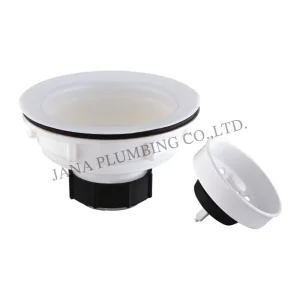
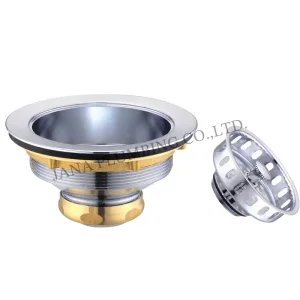
Unlike mechanical pop-up or tip-toe drains that contain moving stoppers, a Grid Drain features a fixed, perforated top strainer grid. This configuration provides distinct technical benefits in commercial buildings:
- Anti-Tamper Performance: Prevents public facility users from removing stoppers or dropping foreign items (paper towels, trash) into waste lines.
- Continuous Free Drainage: Eliminates accidental basin flooding caused by closed stoppers while water faucets remain running.
- ADA Compliance: Meets strict accessibility codes by requiring zero manual operation force at the sink drain point.
Global B2B Sourcing Trends & Compliance Standards
Procurement teams across North America, Europe, and the Middle East are re-evaluating their sanitary hardware supply chains. Sourcing decisions now hinge on stringent material traceabilities, environmental regulations, and zero-defect quality thresholds.
Regulatory Compliance (UPC / cUPC / NSF)
For commercial wholesalers and building product brands supplying the North American market, obtaining official UPC/cUPC certification from IAPMO is mandatory. Drains must pass ASME A112.18.2 / CSA B125.2 hydraulic pressure testing, corrosion resistance tests, and mechanical pull tests.
Lead-Free Metallurgical Directives
Under US Safe Drinking Water Act (SDWA) amendments and California AB1953 mandates, plumbing fittings must maintain a wetted surface lead content of less than 0.25%. Leading Chinese OEM factories utilize certified low-lead brass alloys (such as C37700, C36000, or CW617N) verified via XRF spectrographic analysis.
Surface Finish Innovation (PVD Technology)
Global architectural trends have shifted dramatically away from basic polished chrome toward specialty PVD (Physical Vapor Deposition) finishes including Matte Black, Brushed Gold, Oil Rubbed Bronze, and Gunmetal. Sourcing partners require salt-spray resistance (CASS 24-48 hours) without finish degradation.
Engineering Comparison: Material Alloys Used in Grid Drain Manufacturing
Understanding the structural trade-offs between different metallurgical selections is key for global sourcing engineers.
| Material / Spec | Solid Forged Brass (C37700) | Cast Brass (C85700) | Stainless Steel (AISI 304) | Zinc Alloy (ZAMAK 3) |
|---|---|---|---|---|
| Tensile Strength | High (> 440 MPa) | Medium (~240 MPa) | Very High (> 515 MPa) | Low (~280 MPa) |
| Corrosion Resistance | Exceptional (Dezincification resistant) | Good (Risk of micro-porosity) | Superior (Oxide film) | Poor (Prone to pitting/flaking) |
| Threading Precision | Ultra-Tight CNC Tolerances | Moderate (Cast threads require chasing) | High (Causes tool wear) | Low (Thread stripping hazard) |
| Commercial Lifespan | 25+ Years | 10-15 Years | 20+ Years | 2-5 Years (Not Recommended) |
| Code Compliance | Full ASME A112.18.2 / UPC | Partial / Conditional | Full Compliance | Non-compliant for commercial waste |
China Factory 4.0: Metallurgical Precision & Dual-Origin Capacity
As the world's premier plumbing hub, China's specialized manufacturing industrial clusters (notably in Zhejiang Province, Yuhuan) offer unparalleled supply chain integration. From raw ingot forging to automated electroplating, modern Chinese factories deliver world-class consistency.
Automated Multi-Axis CNC Turning & Stamping
Traditional manual lathe operations introduce thread inconsistencies that lead to installation friction and gasket misalignment. Modern China Industry 4.0 facilities utilize automated multi-spindle CNC machining centers capable of maintaining tolerances within ±0.01mm across millions of units.
The straight tailpiece threading (typically 1-1/4" or 1-1/2" NPSM) is cut with precision dies to ensure smooth locknut engagement and absolute alignment with standard P-traps.
Dual-Origin Resiliency: China Headquarter + Thailand Expansion
To mitigate international geopolitical trade risks, tariff fluctuations, and regional supply chain bottlenecks, industry leaders like JANA Plumbing have pioneered a Dual-Origin Manufacturing Strategy.
By establishing modern manufacturing facilities in both Yuhuan, Zhejiang, China, and overseas hubs like the Kabinburi Industrial Zone in Prachinburi, Thailand (14,400 sq. meter plant), global brands can maintain seamless supply continuity with flexible country-of-origin documentation.
The 6-Stage Industrial Production Pipeline
Hot Forging
Solid brass rods are heated to 750°C and pressed under high tonnage to eliminate internal porosity.
CNC Machining
Automated lathes cut precise NPSM locknut threads, gasket seats, and top flange contours.
Robot Polishing
Robotic arm polishing guarantees a mirror-smooth surface free of micro-burrs prior to plating.
Multi-Layer Plating
Nickel-chrome electroplating or PVD deposition builds a scratch and tarnish-resistant armor.
Localized Architectural Scenarios & Installation Technicalities
Different commercial real estate asset classes require tailored drainage specifications. Sourcing engineers must match the lavatory grid drain model with the physical demands of the intended facility.
High-Traffic Hospitality & Hotels
In luxury hotel suites featuring custom vessel bowls (glass, marble, or undermount ceramics without overflow holes), a premium brass grid drain prevents standing water. The grid mesh pattern is optimized to catch hair and debris while allowing rapid GPM flow to prevent basin backup.
Public Transport Hubs & Stadiums
Airports, train terminals, and sports arenas require zero-maintenance, vandal-proof hardware. Non-overflow grid drains feature heavy-duty brass locknuts and thick bevel rubber washers that resist aggressive chemical cleaning agents and constant public vibration.
Healthcare & ADA Accessible Restrooms
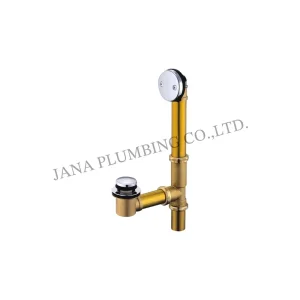
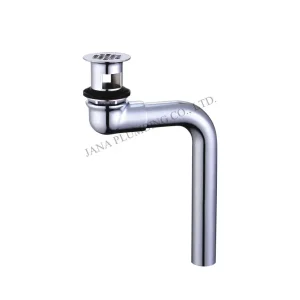
ADA guidelines prohibit manual drain stop mechanisms that require pinching or twisting. The fixed grid design complies natively with ADA Section 606.5. Furthermore, offset tailpiece designs (such as model JN-5001) route waste pipes backward to create wheelchair clearance under sinks.
Custom Technical Specifications & Private Label Branding
Premier Chinese manufacturers act as true engineering partners, offering global brand owners customized dimensional configurations, specialized laser markings, and bespoke packaging solutions.
Dimensional Tailpiece Variations
While the standard US plumbing code calls for a 1-1/4" OD (Outer Diameter) x 4" to 8" long tailpiece for lavatory sinks, European and Latin American markets often mandate 1-1/2" OD tailpieces or custom thread pitches. Factories can adjust CNC programming to produce:
- 17-Gauge Heavy Duty Brass Tube Tailpieces
- 20-Gauge Commercial Brass Tailpieces
- Extended 12" Tailpieces for ADA barrier-free installations
- Custom flanged top profiles matching specific bowl drain radii
Rigorous QA/QC Testing Framework
Every lot leaving the production line undergoes a multi-step quality assurance protocol before shipment approval:
- Hydrostatic Leak Testing: Drain assemblies are pressurized to 0.35 MPa to verify thread gasket seal integrity.
- Spectrographic Material Gun Test: Chemical composition verified for zero lead and correct copper percentage.
- Thickness Gauge & Salt Spray Test: Electroplating layer thickness measured via X-ray fluorescers; CASS chamber testing for finish longevity.
Frequently Asked Questions (B2B Procurement FAQ)
Clear, precise engineering answers to common technical queries raised by global importers, wholesalers, and mechanical contractors.