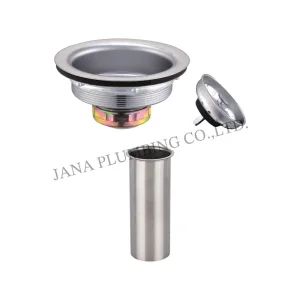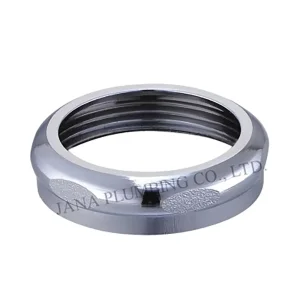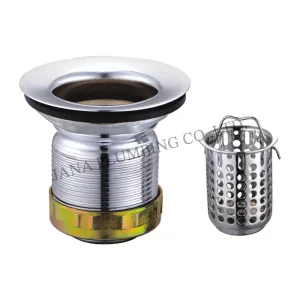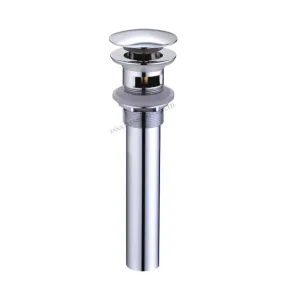
Precision Drain & Strainer Components
Engineered for seamless compatibility with standard 3.5-inch sink openings, thick fireclay/granite composite sinks, and heavy-duty garbage disposal units.
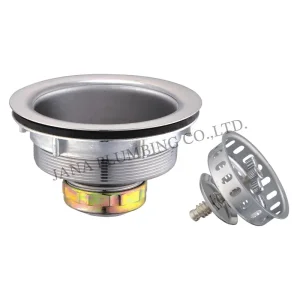
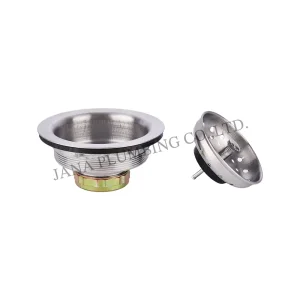
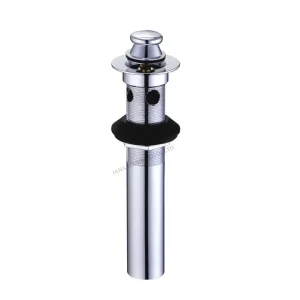
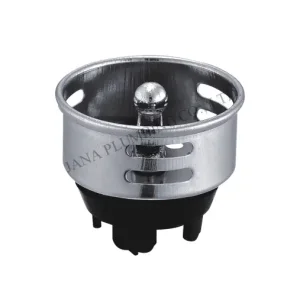
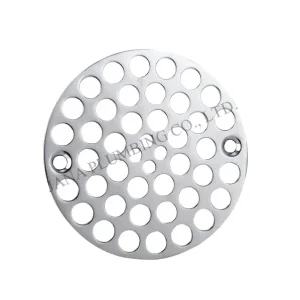
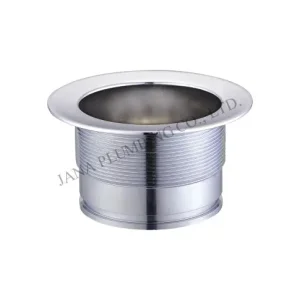
Replacement Deep Style Disposer Flange (JN-1306-F): The Technical Imperative for Modern Sink Infrastructure
In modern architectural plumbing and high-end residential kitchen design, the shift toward heavy-gauge materials—such as thick apron-front fireclay, natural granite composites, quartz, and double-walled insulated stainless steel sinks—has introduced a critical mechanical challenge: standard garbage disposer flanges are physically too short to accommodate extended deck thicknesses. A standard garbage disposal collar provides a maximum throat depth of approximately 1.5 to 1.75 inches, which fails to penetrate thick sink basins while leaving sufficient space below for mounting rings, snap rings, and dampening gaskets.
The China Replacement Deep Style Disposer Flange (Model JN-1306-F) engineered by premier Chinese OEM manufacturers resolves this physical constraint. Featuring an extended collar depth ranging from 2.50 inches to 3.25 inches (63.5 mm to 82.5 mm), the JN-1306-F acts as a structural extension bridge between heavy sink basins and standard 3-bolt garbage disposal mounting assemblies (compatible with leading brands such as InSinkErator®, Badger®, Moen®, and Waste King®).
Dimensional Geometry & Mechanical Interface Engineering
The operational longevity of a deep style disposer flange relies on strict dimensional tolerances and anti-vibration structural integrity. Garbage disposals generate continuous torsional force and high-frequency harmonic vibration (operating at 1,725 to 2,800 RPM). A poorly forged or thin-walled flange subjected to these forces will flex, leading to seal fatigue, plumber's putty breakdown, and structural micro-fractures.
Model JN-1306-F is manufactured via high-pressure hot forging using certified H65 (C36000 equivalent) low-lead brass or heavy-gauge 304 austenitic stainless steel. Hot forging eliminates internal porosity, voids, and micro-cracks common in cheap die-cast zinc alloys, providing a minimum tensile strength of 450 MPa.
| Engineering Parameter | Standard Disposer Flange | JN-1306-F Deep Style Disposer Flange | Structural Advantage |
|---|---|---|---|
| Collar Throat Depth | 1.50" – 1.75" (38 mm – 44 mm) | 2.50" – 3.25" (63.5 mm – 82.5 mm) | Fits fireclay & granite sinks up to 2.25" thick |
| Material Composition | Stamped SS / Die-Cast Zinc | Hot-Forged Solid Brass (H65) / 304 SS | Zero porosity, superior anti-vibration durability |
| Flange Outer Diameter (OD) | 4.50" (114.3 mm) | 4.50" (114.3 mm) Precision Machined | Perfect fit for US standard 3.5" sink drains |
| Mounting System Compatibility | Standard Quick-Lock / 3-Bolt | Universal 3-Bolt & Quick-Lock Adapter | Direct drop-in replacement for major OEM units |
| Chemical & Acid Resistance | Moderate (Prone to pitting) | High (PVD / Multi-layer electroplating) | Resists organic food acids & abrasive detergents |
| Regulatory Certifications | Basic ISO | cUPC®, AB1953 Lead-Free, NSF/ANSI 61 | Fully compliant with North American codes |
Global Commercial & Industrial Application Landscape
How macro trends in high-end kitchen construction, commercial food service, and mobile living are driving demand for replacement deep style disposer flanges.
Luxury Residential & Farmhouse Sinks
The architectural trend toward hand-crafted fireclay, soapstone, and heavy quartz composite sinks in North America and Europe has created a surging demand for extended disposal flanges. Standard flanges included in disposer boxes cannot pass through 2-inch thick fireclay bases, making deep neck flanges an essential accessory for every installation.
Commercial Hospitality & Foodservice
In commercial kitchens, prep stations, and restaurant dishwashing bays, sinks are subject to constant chemical sanitizers, hot grease, and extreme mechanical torque from 1.5 HP commercial grinders. Deep style solid brass flanges provide the mass and structural rigidity needed to prevent joint flex and subterranean leaks.
Class-A RVs, Yachts & Modular Housing
Luxury mobile homes, marine vessels, and pre-fabricated modular units utilize custom composite sinks designed for vibration resistance and sound absorption. Extended deep flanges provide secure, rubber-gasketed compression fits that stay leak-free even during transit over rough terrain.
Technology Roadmap & Advanced Surface Engineering
How leading Chinese factories are advancing metallurgy, acoustic isolation, and physical vapor deposition (PVD) to deliver next-generation disposer flanges.
1. Precision Hot Forging & CNC Multi-Axis Machining
Traditional manufacturing relies on sand casting or low-cost gravity die-casting, which leaves microscopic pinholes inside brass structures. Under constant exposure to acidic food waste (citrus juices, coffee grounds, vinegar), acidic pitting penetrates the casting wall, causing pinhole leaks behind the sink cabinet within 18–24 months.
The **JN-1306-F technology roadmap** mandates a 100% hot-forging process. Solid brass billets are heated to 750°C and forged under 300-ton hydraulic friction presses. The forged blanks are then transferred to multi-axis CNC turning centers to execute micro-inch precise threads, smooth sealing rims, and snap-ring grooves with tolerances maintained within **±0.02 mm**.
2. Acoustic Isolation & Harmonic Damping Engineering
A major consumer complaint regarding garbage disposals in thick fireclay or quartz sinks is acoustic resonance—where the sink basin acts as an amplifier for motor noise. Advanced deep disposer flanges incorporate built-in elastomer dampening channels:
- Dual-Durometer EPDM Gaskets: The lower flange shoulder utilizes a 60-shore-A EPDM gasket that isolates high-frequency motor vibration from the sink body.
- Over-Molded Polymer Dampening Rings: High-end OEM variants feature an over-molded thermoplastic rubber sleeve along the inner throat, reducing operational sound levels by up to 6–8 decibels.
3. Next-Generation PVD (Physical Vapor Deposition) Finishing
To match luxury faucet aesthetics, deep style disposer flanges must withstand harsh physical abrasion from silverware, bone fragments, and heavy cookware. Traditional electroplated finishes (like standard chrome or wet painting) wear off quickly around the flange rim.
Leading Chinese factories utilize **PVD Vacuum Magnetron Sputtering** to deposit titanium or zirconium nitride thin films over nickel-chrome base layers. Key PVD finish characteristics include:
Matte Black (TiAlN)
Super-hard titanium aluminum nitride coating providing exceptional scratch resistance (Hv > 2500) and zero finger-print staining.
Brushed Brass / Gold (ZrN)
Zirconium nitride deposition delivering a rich warm gold luster that resists discoloration from boiling water and harsh food acids.
Gunmetal Stainless (CrN)
Chromium nitride coating offering high corrosion protection and seamlessly matching dark stainless steel sinks.
China's Manufacturing Resilience & Dual-Origin Advantage
Analyzing the raw material clusters, production automation, and international supply chain agility of China's premier sanitary ware hubs.
1. Yuhuan, Zhejiang: The World's Precision Brass Capital
The primary manufacturing ecosystem for China replacement deep style disposer flanges is concentrated in **Yuhuan, Zhejiang Province**. Yuhuan accounts for over 50% of global brass valve and sanitary plumbing component exports. This industrial cluster offers unparalleled supply chain advantages:
- Vertical Raw Material Integration: Immediate access to certified copper refineries ensuring stable copper cathode supplies and precise brass alloy melting (H59-3, H62, H65, Lead-Free C37700).
- Complete Tooling & Mold Ecosystem: Custom forging dies and CNC tooling inserts can be prototyped, heat-treated, and deployed in under 7 business days.
- Automated Surface Finishing Clusters: Fully automated, closed-loop zero-discharge electroplating and PVD facilities operating under stringent environmental compliance.
2. Dual-Origin Manufacturing: China + Thailand Strategy
To mitigate international geopolitical tariffs, trade barriers, and anti-dumping regulations, market leaders like **JANA Plumbing / Gateway Enterprise** have expanded their manufacturing footprint outside China. Establishing a secondary 14,400 m² automated production facility in the **Kabinburi Industrial Zone, Thailand** allows global importers to leverage:
- Tariff Optimization: Direct shipment from Thailand with official Certificates of Origin (CO), bypassing US Section 301 tariffs on Chinese plumbing imports.
- Unified Standard Operating Procedures (SOP): Identical hot-forging molds, CNC tooling programs, and quality control equipment deployed in both China and Thailand plants.
- Supply Chain Redundancy: Uninterrupted batch production capacity across two independent geographic origins during regional disruptions or holiday shutdowns.
Field Retrofit & Installation Protocol for Deep Sinks
Step-by-step master plumber guidelines to ensure zero leak path execution during replacement of standard disposer flanges on thick sinks.
Step 1: Basin Clearance & Bore Inspection
Inspect the sink drain opening using a digital caliper. Ensure the drain hole diameter measures precisely **3.50" to 4.00"** (88.9 mm to 101.6 mm). For fireclay sinks, verify that the bottom basin thickness does not exceed **2.25 inches**, leaving at least **0.75 inches** of exposed thread/collar below the sink deck to receive the 3-bolt mounting gasket, backup ring, and snap ring.
Step 2: Sealant Selection & Application Dynamics
Selecting the correct sealant between the sink flange rim and the sink basin surface is vital to prevent oil staining or chemical degradation:
- For Stainless Steel Sinks: High-grade non-staining Plumber's Putty or 100% Neutral Cure Silicone sealant.
- For Granite Composite & Fireclay Sinks: NEVER use standard oil-based plumber's putty on porous natural stone or unglazed fireclay rim undersides, as petroleum oils will leach into the stone causing permanent dark staining. Always use neutral-cure 100% silicone or pre-formed solid EPDM lip gaskets.
Step 3: Mounting Collar Compression & Snap Ring Seating
Lower the JN-1306-F deep flange into the drain opening from above. From beneath the sink, slide the fiber gasket, rubber gasket, and triangular metal mounting ring over the extended flange collar. Compress the assembly upward and seat the hardened steel snap ring securely into the machined lower collar groove. Evenly tighten the three mounting bolts in a cross-pattern until the rubber gasket compresses evenly without extrusion.
International Regulatory Compliance & Testing Framework
Ensuring full market authorization across North American, European, and Australian building inspection jurisdictions.
cUPC® / ASME A112.18.2
Certified under IAPMO file listings for plumbing waste fittings. Passes rigorous hydrostatic pressure tests and load-bearing pull-apart tests under ASME A112.18.2 / CSA B125.2 standards.
NSF/ANSI 61 & AB1953 Lead-Free
Complies with California Health & Safety Code Section 116875 (AB1953) and NSF/ANSI 372 lead content requirements, ensuring wetted surface lead content remains below 0.25% weighted average.
ISO 9001:2015 Quality Management
Factories operate certified Quality Management Systems (QMS) featuring 100% optical sorting, coordinate measuring machine (CMM) thread audits, and batch spectrographic chemical analysis.
Frequently Asked Questions (FAQ) for OEM Buyers & Importers
Clear answers to complex technical, sourcing, and compatibility queries regarding replacement deep style disposer flanges.
High-Performance Plumbing & Strainer Assemblies
Explore our complete ecosystem of code-certified sink strainers, brass nuts, bar strainers, and replacement shower/bath drain fittings.