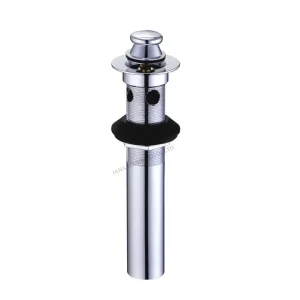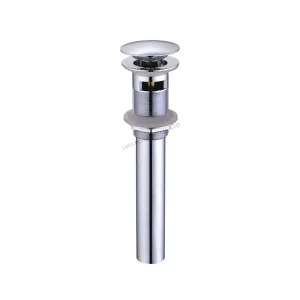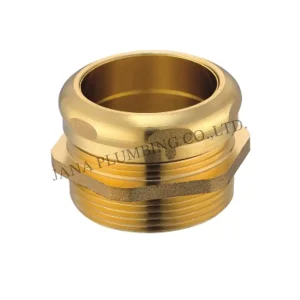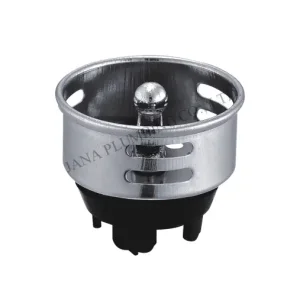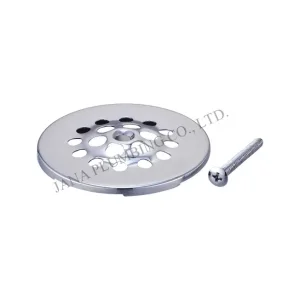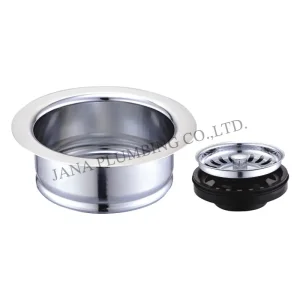
Certified Lead-Free Assemblies & Drainage Components
Explore our core engineering SKUs built to meet rigorous UPC/cUPC, ASME, and NSF standards for high-efficiency plumbing installations.

The Evolution of Lead-Free Dielectric Unions in Modern Piping
Understanding the critical role of electrical isolation fittings in mitigating galvanic corrosion across global municipal, commercial, and industrial plumbing systems.
In modern mechanical engineering and fluid conveyance infrastructure, galvanic corrosion represents one of the most persistent threats to system longevity and structural integrity. When two electrochemically dissimilar metals—such as copper piping and steel water heaters or galvanized iron lines—are joined in the presence of an electrolyte (water), an open-circuit galvanic cell is naturally established. Without proper electrical insulation, electrons flow rapidly from the anodic material (typically steel or iron) to the cathodic material (copper), accelerating structural degradation, pinhole leaks, and catastrophic system failures.
The Dielectric Union serves as the definitive engineering safeguard against this electrochemical breakdown. By inserting a high-grade elastomer insulation barrier and thermoplastic sleeve between the dissimilar metal tailpieces, dielectric unions break the electrical continuity of the piping network, suppressing galvanic currents to negligible micro-ampere levels. Furthermore, global regulatory shifts toward strict lead-free compliance—exemplified by the US Safe Drinking Water Act (SDWA), California AB1953, and NSF/ANSI 372 standards—have rendered legacy brass alloys containing lead obsolete, ushering in a new era of specialized lead-free silicon bronze and bismuth-brass formulations.
Anatomy & Metallurgical Composition of a Lead-Free Dielectric Union
Precision OEM manufacturing process engineered for zero corrosion transfer and maximum hydraulic reliability.
Lead-Free Brass Tailpiece
Machined from premium C89833 / C69300 Eco-Brass or bismuth-bronze alloys. Provides superior tensile strength, stress-corrosion cracking resistance, and absolute compliance with international lead-free drinking water laws.
Thermoplastic Isolate Sleeve
Utilizes high-density molded polysulfone, molded nylon, or virgin PTFE. Engineered to eliminate metal-to-metal contact between the union nut and solder tailpiece while withstanding severe thermal cycling.
EPDM / Buna-N Sealing Gasket
Precision-molded elastomer ring designed to form a hermetic fluid seal under moderate compression. Resistant to chloramines, hard water minerals, and elevated working temperatures up to 210°F.
Standard vs. OEM Lead-Free Dielectric Union Specification Matrix
| Engineering Attribute | Standard Commercial Union | JANA OEM Lead-Free Union (JN Series) | Industry Benchmark Standard |
|---|---|---|---|
| Lead Content (% by weight) | Up to 8.0% (Legacy Brass) | ≤ 0.25% Weighted Average | NSF/ANSI 372 & Safe Drinking Water Act |
| Insulation Material | Standard Polyethylene | High-Temp Polysulfone / Polypropylene | ASTM F492 / ASME B16.39 |
| Pressure Class Rating | 125 PSI - 150 PSI | 250 PSI Working Pressure | MSS SP-107 / ASME B16.39 |
| Electrical Resistance | 10 - 50 Megohms | > 100 Megohms @ 500V DC | NACE SP0286 Corrosion Control |
| Thread Standards | Basic NPT | NPT, BSPT, Female Iron Pipe (FIP), Sweat, PEX | ANSI/ASME B1.20.1 |
Solving Sourcing Complexity for Global OEM & Wholesale Buyers
How enterprise plumbing distributors, water heater manufacturers, and mechanical contractors reduce supply chain vulnerability.
Dual-Origin Manufacturing Security
Global enterprise procurement executives face unprecedented geopolitical and tariff volatility. To eliminate single-source supply chain risk, JANA Plumbing operates dual state-of-the-art production bases:
- Yuhuan, Zhejiang Headquarters (China): Integrated heavy forging, casting, precision CNC machining, and polishing operations established in 1998.
- Kabinburi Industrial Zone Plant (Thailand): Operational since December 2023, featuring 14,400 m² of automated robotic cell assembly lines providing favorable origin status and tariff mitigation.
Comprehensive Quality Verification
Every lot of lead-free dielectric unions and plumbing drain fittings undergoes rigorous multi-stage quality assurance prior to global export:
- Spectrographic Alloy Validation: In-house XRF alloy analyzer checks to verify zero lead contamination and precise copper-zinc-bismuth ratios.
- 100% Pneumatic Leak Testing: High-pressure bubble air testing ensures zero micro-porosity in cast or forged union housings.
- Dielectric Voltage Breakdown Testing: Random lot sampling subjected to high-voltage insulation tests to verify non-conductive integrity.
Macro Industry Applications for Lead-Free Dielectric Unions
Engineered to deliver lifelong electrolytic isolation across demanding mechanical environments.
Commercial Water Heating & Boilers
Protects water heater cold inlet and hot outlet connections where copper supply lines join steel tank nipples. Stops accelerated tank head rusting and premature failure.
HVAC Chilled Water & Hydronic Loops
Prevents galvanic degradation in closed-loop heating and cooling circuits where dissolved oxygen levels can fluctuate, maintaining system efficiency.
Municipal Potable Water Supply
Protects water meter settings, service line transitions from main distribution pipes, and water treatment facility filtration loops against stray current corrosion.
Global Regulatory Compliance & Localized Support
Certifications engineered to satisfy strict North American and European plumbing codes.
Navigating global regulatory landscapes requires a manufacturer with proven certification credentials. JANA Plumbing holds an extensive portfolio of international listings, giving distributors and OEM brand partners complete confidence when bidding on municipal or enterprise building projects.
UPC & cUPC
Certified by IAPMO R&T under ASME A112.18.1 / CSA B125.1 standards for North American plumbing codes.
NSF/ANSI 372
Verified lead-free compliance containing a weighted average lead content of less than 0.25% on wetted surfaces.
ISO 9001:2015
Internationally audited quality management system governing raw material procurement through finished packing.
AB1953 Lead Free
Full compliance with California and Vermont low-lead mandates for drinking water distribution.
Next-Generation Fluid Isolation Technologies (2025–2030)
Pioneering smart dielectric components, advanced ceramic insulation matrixes, and carbon-neutral alloy production.
Advanced Ceramic-Dielectric Inserts
Development of ultra-high-temperature ceramic isolation rings designed for extreme thermal fluid applications exceeding 350°F (176°C) in heavy industrial steam and processing systems.
IoT Corrosion-Monitoring Dielectric Unions
Integrating micro-sensor arrays into the insulation sleeve to transmit real-time stray electrical current and stray voltage data to building automation networks, providing predictive failure alerts.
Eco-Brass & Silicon Metallurgy
Transitioning 100% of brass product lines to zero-lead silicon-bronze formulations that yield improved recyclability, higher fatigue strength, and reduced carbon footprint during induction melting.
Frequently Asked Technical Questions
Engineering answers to critical procurement, installation, and compliance inquiries.
Why is a lead-free dielectric union mandatory in modern plumbing systems?
A dielectric union is mandatory whenever connecting dissimilar metals (such as copper water lines to steel water heater nipples) because dissimilar metals create a galvanic cell when exposed to water. The union breaks electrical conductivity between the metals, halting accelerated galvanic corrosion. Modern building codes require "Lead-Free" standard (NSF/ANSI 372) compliance to ensure wetted plumbing components do not leach harmful lead into drinking water supplies.
What are the key differences between C89833 Eco-Brass and conventional leaded brass?
C89833 Eco-Brass replaces lead with bismuth and selenium to achieve machinability while maintaining a lead content under 0.25%. Bismuth provides self-lubricating properties during CNC turning while enhancing tensile strength and resistance to dezincification in aggressive or high-chlorine municipal water conditions.
How do JANA Plumbing's dual manufacturing bases (China & Thailand) benefit international buyers?
Our dual-origin model gives buyers flexibility and risk diversification. The Yuhuan facility in China brings nearly 30 years of tooling expertise and integrated supply chain efficiencies, while our Kabinburi facility in Thailand provides alternative country-of-origin documentation (COO) to help customers mitigate tariff impacts and build flexible, resilient supply chains.
What installation torque and soldering temperature guidelines should be followed?
During installation, installers must disassemble the union before soldering the copper tailpiece to prevent thermal damage to the thermoplastic insulating sleeve and elastomer gasket. When tightening the union nut onto iron pipe threads, apply moderate torque (typically 35 to 50 ft-lbs depending on pipe size) without over-tightening, which could distort the gasket seal.
Can JANA Plumbing manufacture custom dielectric unions according to OEM specifications?
Yes. With complete in-house forging, hydraulic forming, stamping, CNC machining, and electroplating capabilities, we customize tailpiece lengths, thread dimensions (NPT, BSPT, BSPP), connection ends (Sweat, PEX, Press-fit, FIP), and custom brand laser markings based on client technical drawings or sample parts.
What testing documentation is provided with wholesale orders?
Every shipment can be accompanied by Mill Test Reports (MTR), XRF chemical analysis certificates verifying lead-free compliance, air/hydrostatic leak test reports, and ISO 9001 factory inspection certificates to assist importers with local building code compliance audits.
Specialty Plumbing Fittings & Auxiliary Hardware
Explore our full line of precision brass adapters, drain assemblies, and kitchen hardware fittings.