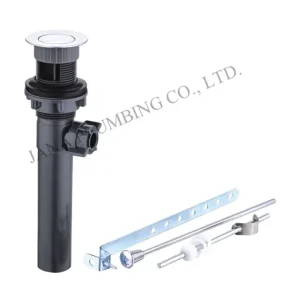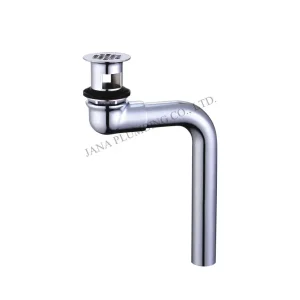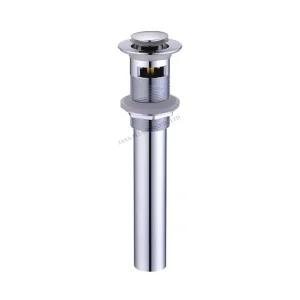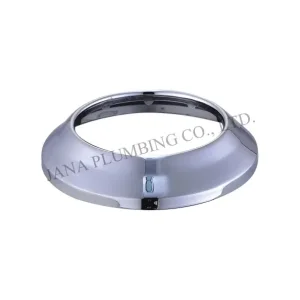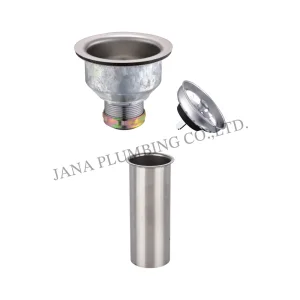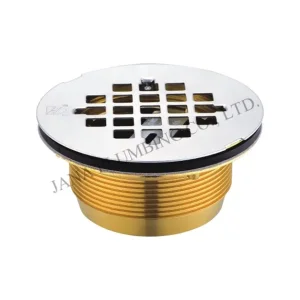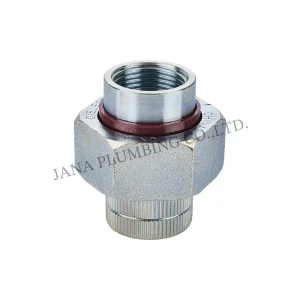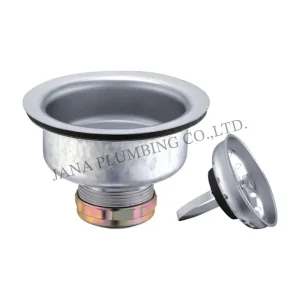
Precision-Engineered Drain Strainer & Assembly Series
Explore our primary industrial production run for North American, European, and Asia-Pacific plumbing imports. Built for leak-proof endurance and verified structural integrity.
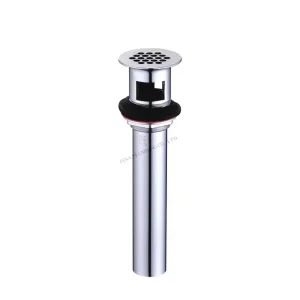
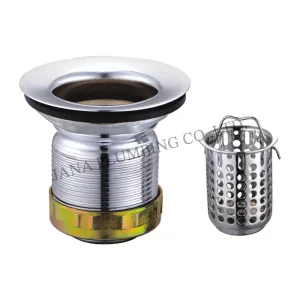
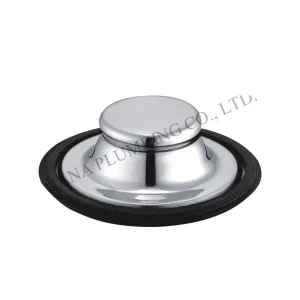
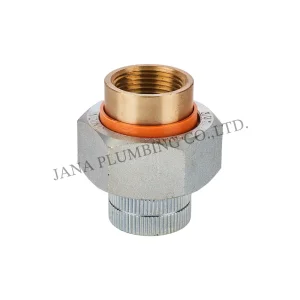
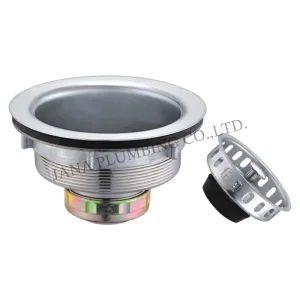
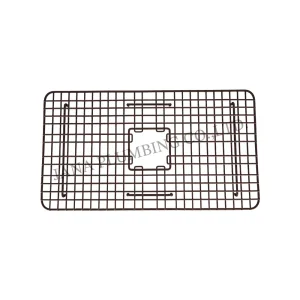
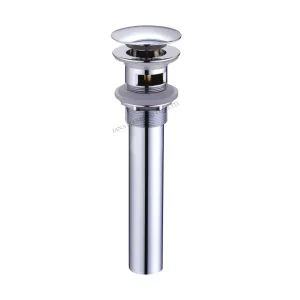
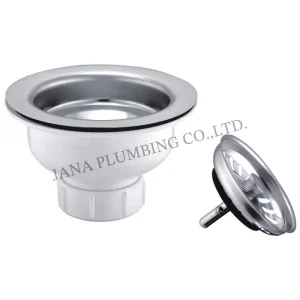
Comprehensive Engineering Guide to Wholesale Kitchen Sink Drain Strainers
In modern architectural and commercial plumbing systems, the kitchen sink drain strainer operates as a critical hydromechanical barrier between residential/commercial waste discharge and municipal drainage networks. Far beyond a simple decorative plug, a high-spec wholesale kitchen sink drain strainer must maintain absolute structural integrity under continuous exposure to extreme thermal fluctuations (0°C to 100°C), acidic food wastes, caustic cleaning detergents, and constant hydraulic head pressure.
When global procurement executives and MEP (Mechanical, Electrical, Plumbing) engineering consultants evaluate kitchen sink drain strainer factories, technical assessment centers on material grain structure, tensile strength, thread pitch precision, and gasket seal elasticity. Lower-grade die-cast zinc strainers suffer from intergranular corrosion and rapid fatigue, leading to catastrophic sub-sink leaks. High-volume manufacturing factories specializing in solid brass (C37700 hot forged brass or C36000 free-cutting brass) and premium austenitic stainless steel (AISI 304/316) provide the benchmark for commercial durability and compliance.
When ordering high-density brass strainers (such as our heavy-duty JN-1001 and JN-1021 series), hot forged brass bodies reduce internal porosity to absolute zero. This structural density prevents micro-pinhole seepage over a 30-year lifecycle—an essential baseline required by North American UPC and cUPC standards.
Material Performance Matrix: Brass vs. Stainless Steel vs. Zinc
| Performance Metric | Hot Forged Solid Brass (C37700) | Deep-Drawn Stainless Steel (SUS304) | Economy Zinc Die-Cast |
|---|---|---|---|
| Tensile Strength (MPa) | 440 - 490 MPa | 515 - 620 MPa | 200 - 280 MPa (Prone to fracture) |
| Acid & Alkaline Resistance | High (Passivated layer) | Exceptional (Passivated Cr2O3 film) | Poor (Rapid pitting corrosion) |
| Thread Threading Precision | CNC Machined NPSM Class 2A/2B | Roll Threaded / Machined | Cast threads (High leak rate) |
| Target Application | Commercial, Luxury Residential, RV | High-Volume Retail, Standard Residential | Short-term budget replacement |
| Service Life Expectancy | 25+ Years | 20+ Years | 2–5 Years max |
Kitchen Sink Drain Strainer Technology Roadmap & Future Outlook
The plumbing industry is undergoing a digital and metallurgical evolution. As smart homes and sustainable infrastructure expand globally, sink drainage components are evolving into precision smart-switches and anti-microbial eco-valves.
Phase 1: Advanced PVD & Nanotech Surface Finish Engineering (2026)
Traditional electroplating (chrome/nickel) is yielding to Physical Vapor Deposition (PVD) advanced vacuum coating technology. Next-generation factories integrate Titanium Nitride (TiN) and Zirconium Nitride (ZrN) target sputtering to yield ultra-hard decorative finishes like Brushed Gold, Matte Black, Antique Copper, and Gunmetal. These coatings achieve >100 hours of Neutral Salt Spray (NSS) testing (ASTM B117) and resist aggressive scratching, fingerprinting, and mineral buildup.
Phase 2: Bio-Inhibitory Strainer Baskets & Self-Cleaning Geometry (2027–2028)
Integration of copper-ion (Cu2+) and silver-ion embedded matrix structures inside strainer basket rubber stoppers prevents bio-slime formation, organic decay, and odor generation. Simultaneously, computational fluid dynamics (CFD) modeling of basket perforation arrays optimizes water flow velocity (GPM) while intercepting solid particulates larger than 2.0 mm, eliminating sink standing water during food prep.
Phase 3: Smart Sensor Integrated Drainage Systems (2029–2030+)
Smart commercial kitchens require automated monitoring. Future high-tier drain strainers will embed micro-pressure sensors and conductivity meters directly within the dielectric union or tailpiece (such as JN-3016 or JN-1014-T). These sensors detect micro-blockages, grease accumulation, and localized pipe leaks, transmitting telemetric alerts directly to building management systems (BMS).
Macro Industry Solutions for Global Procurement Networks
Commercial Hospitality & Food Service
High-volume commercial kitchens require heavy-duty deep cup basket strainers (e.g., JN-1014-T or JN-1205 Junior Duo). Features include post-basket stoppers, extra-wide lip flanges, and reinforced tailpiece locknuts that tolerate constant heavy pan impacts, thermal dishwashing flushes, and heavy sediment entrapment without seal dislodgement.
High-Density Residential & Private Label Brands
Big-box hardware distributors and private label retail brands seek complete OEM customization. Factories support custom laser engraving, barcode retail blister packaging, and full-color box design alongside standardized ASME A112.18.2 compliance to ensure turn-key retail rack placement across North American stores.
Recreational Vehicle (RV) & Marine Plumbing
Compact living modules require specialized lightweight, space-saving drains such as shallow pattern flanges (JN-8100) and specialized dielectric unions (JN-3016/3017). These units isolate dissimilar metals, preventing galvanic corrosion when connecting copper, brass, or plastic piping in mobile vehicle chassis.
Global Regulatory Assurance & Localization Testing
Importing plumbing hardware requires absolute compliance with local building codes. Non-certified drain strainers risk customs holds, retail rejection, and costly liability claims.
UPC / cUPC Certification (IAPMO)
Listed under Uniform Plumbing Code (UPC) and Canadian Uniform Plumbing Code (cUPC), products strictly adhere to ASME A112.18.2 / CSA B125.2. Testing verifies dimensional tolerances, thread pitch integrity (1-1/2" NPSM standard), and leak-tight joint sealing under pressure.
California AB 1953 & Lead-Free Compliance
In accordance with U.S. Safe Drinking Water Act and California Health & Safety Code Section 116875 (AB 1953), wetted surface lead content is held below a weighted average of <0.25%. Spectrometric XRF testing ensures zero toxic metal leaching into municipal water streams.
ISO 9001 Quality System Governance
Manufacturing facilities operate under certified ISO 9001 quality management systems. Every batch undergoes 100% pneumatic seal testing, electroplating thickness checks, and thermal shock testing before packaging and shipping.
China Industry 4.0: Supply Chain Resilience & Dual-Origin Efficiency
Manufacturing excellence in kitchen sink drain strainers requires combining industrial concentration with multi-national manufacturing flexibility. Headquartered in Yuhuan, Zhejiang Province—the world’s premiere manufacturing hub for sanitary hardware and brass valves—our primary factory leverages complete vertical supply integration. From raw brass extrusion, hydraulic hot forging, progressive stamping, and CNC precision threading to dynamic polishing, every step takes place within a 10-kilometer logistics radius.
Yuhuan Zhejiang Core Base
Houses automated robotic CNC centers and multi-station progressive stamping presses. Delivers ultra-high precision tolerances (±0.02mm) for high-volume drain bodies, locknuts, and basket assemblies.
Thailand Kabinburi Plant Hub
Spanning 14,400 m² in Prachinburi Province, Thailand, our second fully operational manufacturing plant provides a strategic dual-origin footprint. Importers gain zero-tariff trade pathways, mitigating geopolitical risk while utilizing identical engineering dies and ISO 9001 QC protocols.
Automated Quality Assurance
Robotic vision inspection systems scan every flange rim, thread pitch, and surface finish for micro-flaws. Automatic pneumatic pressure tester beds check 100% of drain seals before final packaging.
Global Enterprise Procurement & Sourcing Demand Matrix
When global sourcing directors and VP Procurement officers negotiate wholesale kitchen sink strainers, purchasing decisions extend beyond unit cost (FOB price). Total Cost of Ownership (TCO) calculation encompasses defect rates, landed tariff structures, inventory turnover speed, and warranty failure liabilities.
| Procurement Pillar | Factory Baseline Standard | Enterprise Risk Mitigation Impact |
|---|---|---|
| MOQ Flexibility | 1,000 Pcs / Standard SKU; 3,000 Pcs Custom Finish | Prevents capital lockup while supporting agile SKU testing. |
| Quality Inspection (AQL) | ISO 2859-1 Level II Normal, Major 1.0 / Minor 2.5 | Eliminates batch returns and sub-sink leakage claims. |
| Supply Chain Origin | Dual Sourcing Option: China (Zhejiang) & Thailand | Bypasses anti-dumping duties and mitigates geopolitical tariff spikes. |
| OEM / Private Labeling | Laser etched logo, custom UPC packaging, blister kits | Accelerates private brand shelf display speed-to-market. |
Frequently Asked Questions (FAQ) for Plumbing Hardware Sourcing
1. What are the standard dimensions for wholesale kitchen sink drain strainers?
2. How does a solid brass strainer compare to a stainless steel basket strainer?
3. What certifications are mandatory when importing sink strainers to North America?
4. Why is a dielectric union (e.g., JN-3016 / JN-3017) critical in sink drainage installations?
5. What surface finishes are available for OEM wholesale drain strainer orders?
6. How does factory dual-sourcing (China + Thailand) benefit global buyers?
7. What is the difference between a locknut assembly and a post-basket strainer design?
8. Can factories produce custom-branded retail packaging for private labels?
9. How does a bottom grid (e.g., JN-9888-5-ABP) protect sink drainage systems?
10. What is the standard lead time for wholesale factory shipments?
Specialized Drains, Pop-Ups & Dielectric Fittings
Complete your bulk plumbing procurement program with our certified array of lavatory pop-ups, shower drains, and dielectric couplings.