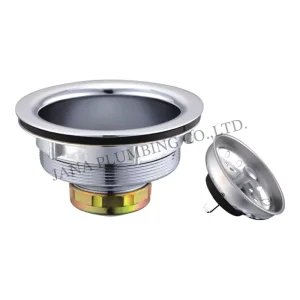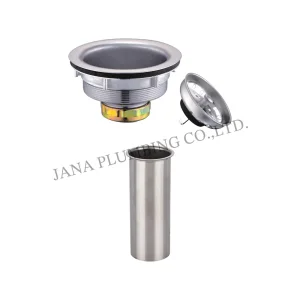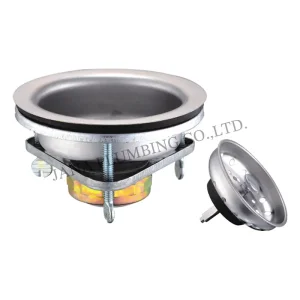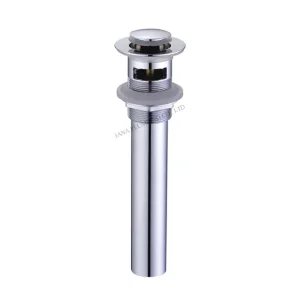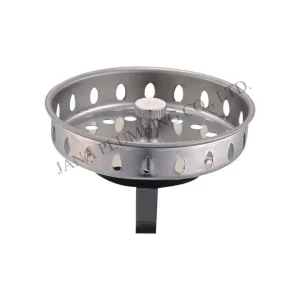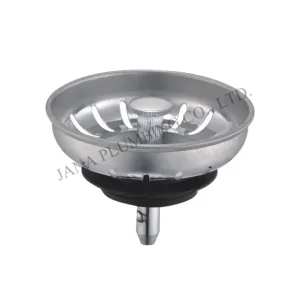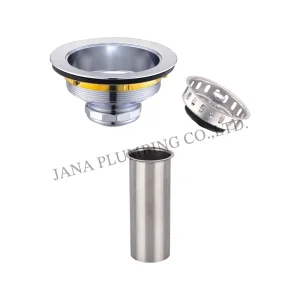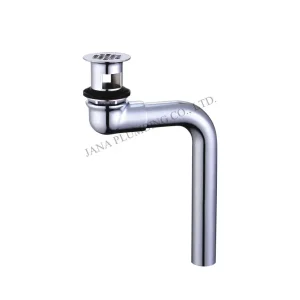
Precision Drain Assemblies & Hardware Series
Engineered for rigorous residential, commercial, and RV plumbing standards across North America and global markets.
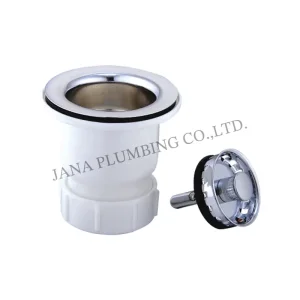
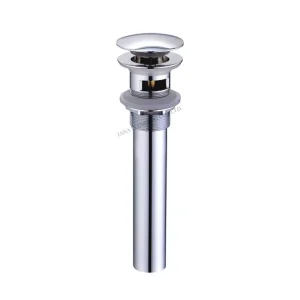
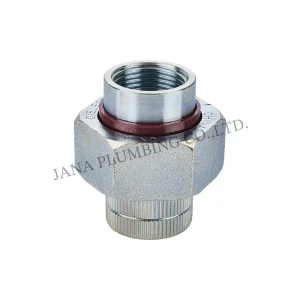
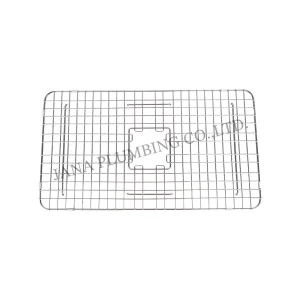
1. Global Commercial & Industrial Landscape of Kitchen Drain Systems
The global kitchen sink strainer and drainage hardware market has evolved from a commodity hardware sector into a precision engineering discipline. Driven by stringent municipal environmental standards, rising demand for architectural workstation sinks, and strict commercial building codes, sink strainers serve as the foundational interface between kitchen sanitary fixtures and building DWV (Drain, Waste, and Vent) systems.
In wholesale distribution and industrial manufacturing, kitchen sink strainers must fulfill dual imperatives: high volumetric flow rate throughput and uncompromising mechanical sealing. According to market data from international plumbing equipment associations, the global kitchen plumbing accessories market is expanding at a CAGR of over 5.4%, driven heavily by multi-family residential construction, commercial food service facilities, and retrofitting legacy plumbing systems in North America and Western Europe.
For B2B buyers—including kitchen sink factories, plumbing wholesalers, private label brands, and hardware importers—selecting a specialized strainer manufacturer is not simply a matter of unit price. It requires a deep evaluation of metallurgy, dimensional repeatability, gasket thermal resilience, and certification alignment. A single failure in a sink strainer's locknut threads or lip seal can lead to catastrophic water degradation, costly warranty claims, and brand damage.
2. Technical Architecture & Manufacturing Metallurgy Roadmap
Designing high-reliability kitchen sink strainers requires balanced material science and metal-forming technologies. Industrial sink strainers operate in chemically aggressive environments exposed to thermal shocks (boiling water to ice water), organic acids, fatty lipids, and abrasive household cleansing agents. Below is the technical breakdown of material selection and manufacturing processes.
Solid Forged Brass (C37700 / CW617N)
Hot forged brass bodies offer maximum structural density, zero porosity, and immunity to stress corrosion cracking. Ideal for commercial-grade basket strainers requiring thick locknut threads and high torque resistance during installation.
Austenitic Stainless Steel (AISI 304 / 316)
Deep-drawn 304/316 stainless steel offers unmatched resistance to pitting corrosion and chemical discoloration. Precision-punched perforation matrix designs ensure optimal water evacuation while stopping debris larger than 3.5mm.
Surface Finishing & PVD Layering
Electroplated Chrome, Brushed Nickel, Oil Rubbed Bronze, and Physical Vapor Deposition (PVD) Matte Black finishes undergo 96-hour neutral salt spray (NSS) testing to ensure zero peeling, tarnishing, or oxidization under heavy daily usage.
| Material / Spec | Tensile Strength (MPa) | Corrosion Rating (NSS) | Primary Application | Code Compliance |
|---|---|---|---|---|
| Solid Brass (C37700) | 440 - 490 | > 96 Hours Class 10 | Commercial Heavy-Duty Strainers | UPC, cUPC, AB1953 |
| Stainless Steel (AISI 304) | 515 - 620 | > 240 Hours Class 10 | Residential Workstation Sinks | ASME A112.18.2 / CSA B125.2 |
| Die-Cast Zinc Alloy (ZAMAK 3) | 280 - 330 | 48 Hours Class 8 | Budget Builder Hardware Lines | Standard Domestic Plumbing |
| EPDM Rubber Gaskets | 10 - 15 | Thermal Range: -40°C to 120°C | Dynamic Strainer Flange Sealing | NSF / ANSI 61 Compliant |
3. Localized Application Scenarios for Kitchen Strainer Assemblies
Sink strainers are not universal across all global regions; their functional design depends heavily on local architectural standards, culinary habits, and municipal wastewater regulations. Understanding these localized application dynamics allows sink factories and importers to optimize their catalog selection.
North American Residential Standard (3.5" Bore)
North American kitchens universally utilize 3.5-inch (89–90mm) sink opening cutouts requiring strainers compatible with standard 1.5-inch NPSM tailpieces. Systems must integrate with garbage disposer flanges (such as InSinkErator mounts) and accommodate both stainless steel undermount sinks and deep quartz composite basins.
European & UK Waste Systems (90mm Basket Waste)
European installations predominantly favor 90mm basket waste assemblies featuring integrated overflow channels, rectangular or round overflow plates, and integrated plug-stopper mechanisms compliant with BS EN 274 standards. Low-profile space-saving P-traps are commonly paired with these units.
Commercial Foodservice & Industrial Facilities
High-volume commercial kitchens require heavy-duty duo strainers constructed with solid brass bodies, deep stainless steel basket inserts, and twist-lock or lever-operated waste valves. These units withstand continuous grease exposure, aggressive dishwashing detergent concentrations, and high GPM water flow.
4. China Supply Chain Resilience & Manufacturing Efficiency
China remains the undisputed global hub for sanitary ware manufacturing, anchored by specialized industrial clusters such as Yuhuan in Zhejiang Province. The synergy of raw brass smelting, cold forging, precision CNC turning, automated electroplating, and custom packaging within a 30-kilometer radius delivers unprecedented supply chain efficiency and agility.
Industrial Cluster Density
Local access to copper ingot exchanges, specialized rubber seal molders, and automated plating lines reduces production lead times from months to weeks. Raw material price hedging mechanisms protect OEM clients from volatile copper market shifts.
Robotic Machining & Automation
Implementing multi-axis CNC turn-mill centers and robotic arm polishing stations eliminates human margin of error. Locknut thread tolerances are maintained within ±0.02mm, guaranteeing perfect hand-tightening and wrench seating on job sites.
Dual-Base Manufacturing Flexibility
To assist global buyers in mitigating trade tariffs and geopolitical supply chain risks, modern suppliers operate dual manufacturing facilities—combining primary Chinese engineering headquarters with secondary automated plants in Southeast Asia (such as Thailand).
5. Regulatory Compliance, Certifications, & Quality Assurance
Entering international retail channels or supplying major commercial housing projects requires verified compliance with regional plumbing codes and health standards. Importing non-compliant plumbing hardware risks severe customs seizures, mandatory recalls, and legal liabilities.
cUPC & IAPMO Certification
Uniform Plumbing Code (UPC) and Canadian Uniform Plumbing Code (cUPC) certification issued by IAPMO confirms that drain hardware strictly meets ASME A112.18.2 / CSA B125.2 structural, dimensional, and hydrostatic requirements.
AB1953 & NSF/ANSI 372 Lead-Free Compliance
California Assembly Bill 1953 (AB1953) mandates that wetted surfaces of plumbing pipes, fittings, and fixtures contain less than 0.25% weighted average lead content. Chemical spectrometry testing ensures strict lead-free compliance.
ISO 9001:2015 Quality Management Systems
Every manufacturing phase—from raw brass billet inspection via X-ray fluorescence (XRF) analyzers to pneumatic underwater bubble leak detection—is monitored under ISO 9001 quality protocols with full lot traceability.
6. Frequently Asked Questions (Q&A) for OEM B2B Buyers
What are the key structural differences between fixed-post, snap-in, and duo basket strainers?
How do you prevent water leaks between the sink basin and the strainer flange?
What custom OEM choices are available for private label kitchen sink factories?
Why is lead-free brass (AB1953) mandatory even for kitchen sink drain hardware?
What is the standard production lead time for full container load (FCL) orders?
Explore Additional Drainage & Sanitary Components
Comprehensive wholesale solutions designed for plumbing distributors, contractors, and kitchen sink manufacturers.