
Featured Product Catalog — Batch I
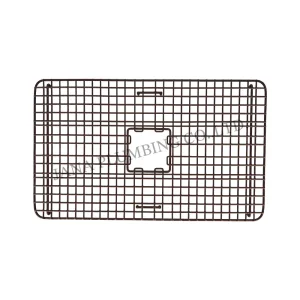
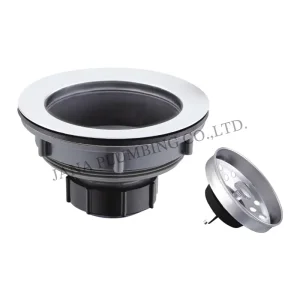
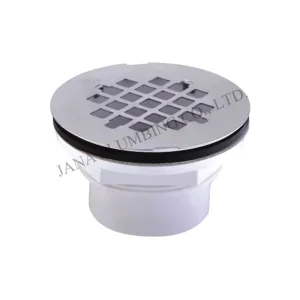
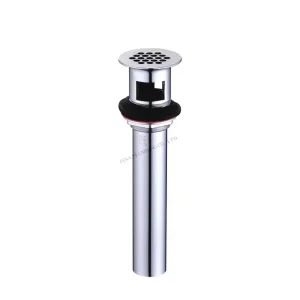
Explore certified kitchen sink strainers, bottom grids, shower drains, and lavatory hardware directly manufactured for North American and global commercial distribution.
1. Executive Summary: The Global White Basket Strainer Evolution
Strategic insights into polymer adoption, aesthetic trends in modern kitchen architecture, and structural supply chain pivots.
In contemporary kitchen design and commercial plumbing engineering, the demand for high-durability, non-corrosive, aesthetically integrated sink components has led to a major industry transformation. While traditional metallic strainers—predominantly stainless steel and chrome-plated brass—have historically dominated wholesale distribution, white basket strainers engineered from advanced polymers (polypropylene, ABS, POM, and engineered composites) have transitioned from budget alternatives to high-specification functional hardware.
This industry whitepaper evaluates the technical specifications, global manufacturing methodologies, material science innovations, and trade dynamics governing the wholesale white basket strainer market. Produced with strict adherence to engineering standards established by ASME, CSA, and IAPMO, this guide serves as a comprehensive resource for procurement officers, plumbing distributors, OEM brands, and enterprise contractors seeking robust manufacturing partnerships.
Shift in Kitchen Aesthetics
The rapid consumer adoption of granite composite, quartz, and white fireclay sinks has generated massive market pull for color-matched white strainers, eliminating metallic visual disconnects in minimalist interior architecture.
Chemical & Corrosion Resistance
Polymer-based white basket strainers provide absolute immunity to pitting, oxidation, and chemical degradation caused by acidic food waste, aggressive detergents, and hard water minerals.
Cost Optimization & Value Engineering
High-precision injection molding drastically reduces multi-stage tooling costs and cycle times compared to metal stamping and hydraulic deep-drawing, presenting high-margin opportunities for wholesale importers.
2. Material Science & Manufacturing Technical Roadmap
Evaluating polymer formulations, mold geometry, UV stabilization, and sealing performance.
Manufacturing a commercial-grade white basket strainer requires rigorous material selection to prevent thermal warping, stress cracking, and discoloration over decades of daily use. Primary polymer matrix choices include:
| Polymer / Material Grade | Tensile Strength (MPa) | Thermal Resistance (°C) | Chemical & Stain Resistance | Primary Application Profile |
|---|---|---|---|---|
| High-Impact Polypropylene (PP) | 30 - 40 | Up to 100°C | Excellent against acids & household solvents | Economy & standard residential strainers (e.g., JN-1008) |
| Acrylonitrile Butadiene Styrene (ABS) | 40 - 55 | Up to 85°C | High impact strength; requires UV stabilizer | Heavy-duty strainer bodies & RV plumbing fittings |
| Polyoxymethylene (POM / Acetal) | 60 - 70 | Up to 120°C | Superior mechanical strength & thread integrity | Precision locknuts, post assemblies & valve stems |
| Brass Body + Powder-Coated White Finish | > 350 | Up to 150°C | Requires epoxy-cured electro coating | Luxury architectural & commercial food-service installs |
Key Manufacturing Engineering Standards:
- UV-Stabilized Masterbatch Integration: To combat yellowing caused by ambient sunlight and indoor UV exposure, leading factories infuse Hindered Amine Light Stabilizers (HALS) directly into the raw resin matrix prior to injection molding.
- Anti-Microbial Ion Additives: Silver-ion (Ag+) antimicrobial agents can be compound-blended to inhibit bacterial biofilm buildup, mold growth, and odor retention within the basket assembly.
- Hydrostatic Sealing Geometry: Advanced strainers feature dual-lip Buna-N (NBR) or EPDM rubber gaskets paired with precision molded tapered locknut threads, ensuring drop-tight seal performance under 50 PSI water head pressures.
3. Sourcing Logistics & Dual-Origin Manufacturing Advantages
Mitigating geopolitical tariffs and securing global supply chain resilience through multi-factory production footprints.
Global sanitary ware procurement managers face mounting risks surrounding trade tariffs, shipping container bottlenecks, and regional supply disruptions. Establishing strategic partnerships with multi-facility manufacturers capable of cross-border production offers an essential competitive buffer.
Yuhuan, China Headquarters
Primary Production Hub: Founded in 1998, the Yuhuan manufacturing facility serves as the central hub for R&D, master mold fabrication, brass hydraulic forming, deep stamping, high-speed automated CNC machining, and comprehensive decorative finish application.
- 28,400 m² combined industrial manufacturing space
- Fully integrated toolmaking and plastic injection molding shops
- In-house metallographic labs & spectrographic chemical testing
Kabinburi, Thailand Factory Base
Gateway Enterprise Corporation (Thailand) Co., Ltd.: Operational since December 2023, this strategic 14,400 m² automated facility located in Prachinburi Province provides North American and European buyers with a fully compliant, secondary production origin.
- Bypasses Section 301 tariffs on Chinese origin plumbing hardware
- Automated robotic manipulator assembly lines
- Identical quality control standards & ISO 9001 management protocols
4. Regulatory Compliance & Quality Assurance Framework
Ensuring compliance with ASME A112.18.2 / CSA B125.2, UPC, cUPC, and Lead-Free mandates across international distribution channels.
Commercial acceptance in North American, European, and Australian markets mandates absolute compliance with regional plumbing codes. Non-compliant strainers risk catastrophic field failures, costly property damage claims, and immediate customs detention.
Core Industry Certification Standards:
- UPC & cUPC Certification (IAPMO Listed): Verifies that sink strainers, lavatory drains, and shower waste assemblies meet rigorous mechanical loading, thread tolerance, and hydraulic flow rate specifications under standard ASME A112.18.2 / CSA B125.2 tests.
- AB1953 / NSF 372 Lead-Free Compliance: Applies strictly to brass drain components and metallic water-contact hardware, ensuring weighted lead content remains below 0.25%.
- ISO 9001:2015 Quality Management Systems: Guarantees standardized quality control checks throughout every phase of production, from raw material ingot analysis to final automated torque testing of locknuts.
Thread Fit Precision
100% optical comparator checking of 1-1/2" NPSM tailpiece threads ensuring smooth hand-tightening and wrench torque tolerance without stripping.
Corrosion & Salt Spray Testing
Decorative white finishes and metallic underlying substrates undergo 96-hour neutral salt spray (NSS) testing to prevent flaking, pitting, or discoloration.
Thermal Cycling Rigor
Component strainers undergo thermal shock testing alternating between 5°C and 90°C water flow cycles to ensure structural integrity and gasket resiliency.
5. Macro Sector Solutions & Application Workflows
Custom engineering configurations for residential retail, commercial food service, modular housing, and marine/RV plumbing.
White basket strainers are engineered across various functional configurations tailored to specific commercial operating environments:
Residential Builder & DIY Retail Kits
Designed for rapid consumer assembly, retail-ready white basket strainers feature tool-free hand-tightened plastic locknuts, drop-in post baskets with rubber stoppers, and pre-cut extended tailpieces packaged in customized private-label blister packs.
Commercial Kitchen & Institutional Facilities
High-traffic commercial food prep areas utilize heavy-duty white POM strainers integrated with stainless steel deep-cup debris baskets. These units handle continuous hot water discharge, high-density food waste, and commercial dishwashing chemicals.
Recreational Vehicles (RV) & Marine Craft
Compact bar sinks and lightweight mobile home plumbing networks demand compact 2" or 3-1/2" white plastic basket strainers (e.g., JN-1201 series) that minimize vehicle payload weight while providing vibration-resistant sealing.
Modular & Prefabricated Home Construction
High-volume modular home manufacturing relies on pre-assembled drain kits featuring integrated no-caulk gaskets, enabling rapid sub-assembly installation and reducing site-level plumbing labor hours by up to 40%.
Featured Product Catalog — Batch II
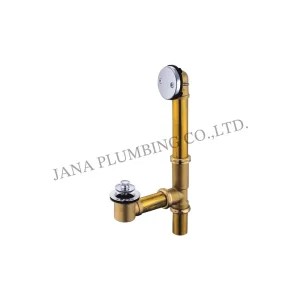
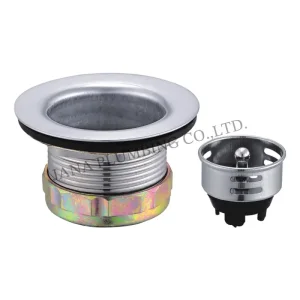
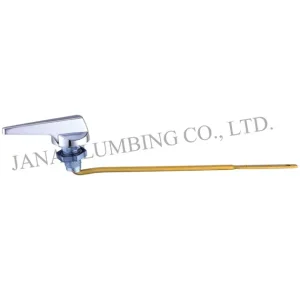
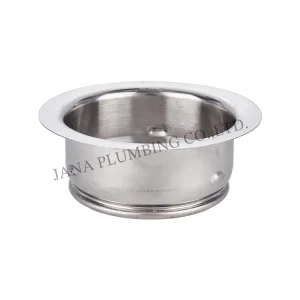
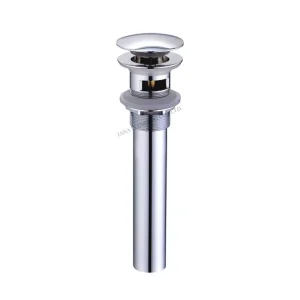
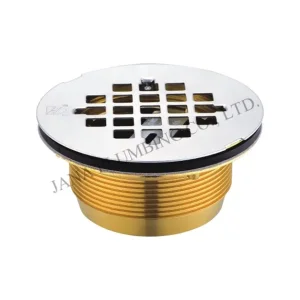
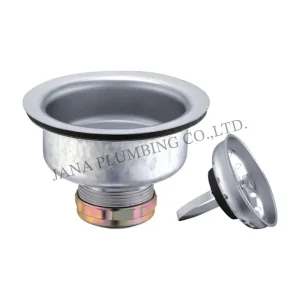
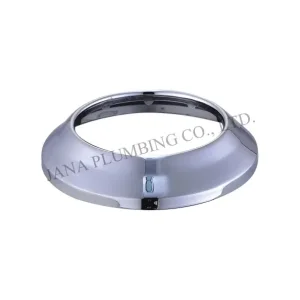
Complete your supply chain requirements with our expanded collection of bath waste drains, bar strainers, disposer flanges, and precision plumbing fittings.
6. Future Technical Roadmap & Sustainable Manufacturing
Next-generation polymer recycling, smart drainage monitoring, and automated manufacturing processes.
As global environmental regulations tighten, sanitary hardware factories are advancing their R&D initiatives to integrate sustainable practices without compromising mechanical longevity:
Bio-Polymer & PCR Integration
Developing Post-Consumer Recycled (PCR) polypropylene matrices that retain 95%+ of virgin polymer tensile strength while reducing manufacturing carbon footprints by 35%.
PVD White Ceramic Coatings
Advancing Physical Vapor Deposition (PVD) titanium ceramic coatings applied over solid brass, delivering scratch resistance 5x superior to conventional powder coating.
Zero-Waste Closed Loop Molding
Implementing closed-loop sprue recycling systems during injection molding, eliminating plastic scrap waste directly at the machine station.
7. Wholesale Sourcing Q&A (FAQ)
Direct technical answers to common procurement, compliance, and custom manufacturing inquiries.